When I broke my wrist in freshman P.E., swimming was my immediate concern. Trotting back toward my classmates, briefly in denial about my injury, I looked for the first time at my hand hanging askew, sat back down on the field, and realized, “I’m not gonna be able to swim with this.” Nearly thirty years later, when my ten-year-old son broke his wrist falling off the neighbors’ dock, I tried to suppress the same thought – “he’s gonna be out of swim practice” – but I can’t deny it was among the first to cross my mind.
I was a little disgusted with myself. My son was hurt, and I was thinking of his budding swim career, his ten-year-old season interrupted by untimely injury, his chances at a state championship diminished by a long stretch of missed training. I was the crazed swim parent, obsessed, pinning my child’s and my own worth to performance in the pool. I was everything I preach against.
Two days prior I ran a parent meeting about goal books. “I promise I’m not going to talk to my kids about their goal books,” I told them. “We do not talk about swimming once we leave the pool,” I said. There was quiet in the room, maybe even a touch of surprise as I implored the other parents to do the same for their kids, to leave them and their goal books alone.
I told them how my father had encouraged me after I failed to make the state meet in my first year, back when I was Cartter’s age, how he told me he knew I was going to achieve much higher standards, and how I’d been frightened by the weight of his expectations. I read cards the kids wrote about why they swim, stressing that the number one reason was “friends.” It was the best parent talk I ever gave, and I was elated to have communicated so well. That prior elation only added to my sense of shame in the immediate aftermath of Cartter’s injury. I felt like a hypocrite.
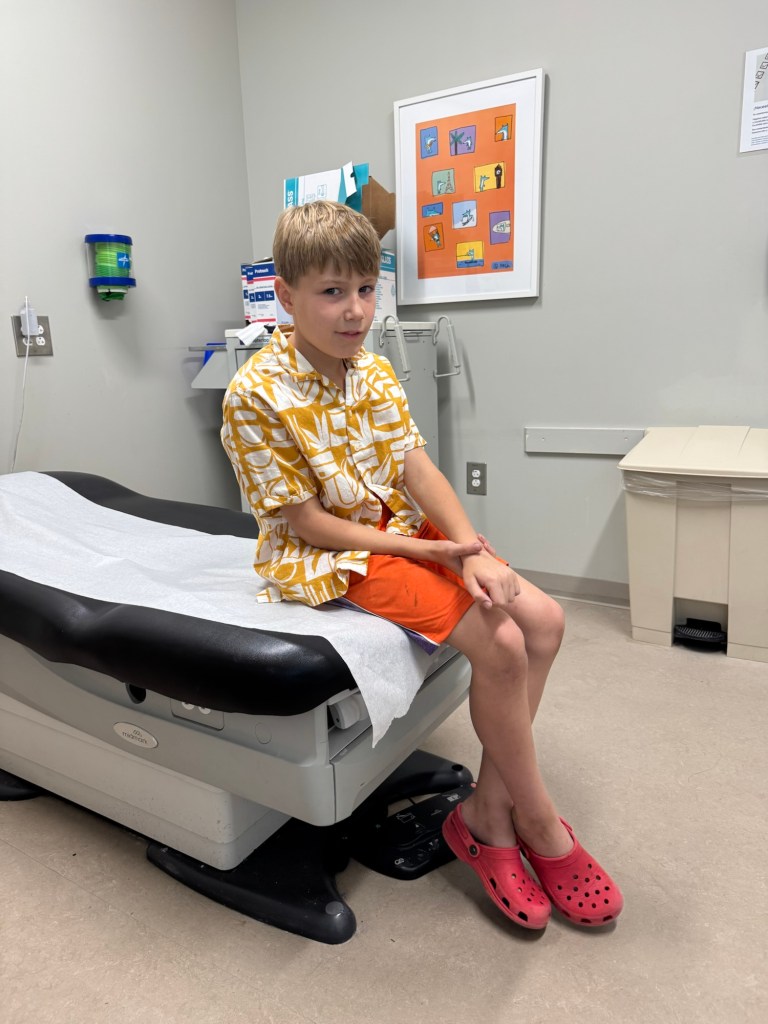
The news of Cartter’s tumble came mid-afternoon while I was in the kitchen washing dishes. The doorbell rang – Lindsay McCoy, the mother of Cartter’s friend – and suddenly Danyelle appeared, eyes wide with alarm, telling me “Cartter fell off the dock, and his arm’s swollen.” The ensuing adrenaline spike brought with it a sense of calm. There was reassurance at hearing about an arm and not a head, although the words “fell, arm, swollen” seemed to indicate a break. I was tying my shoelaces, quickly readying myself to collect my son, when the thought of his swimming fully surfaced. By the time I made it out the door, here he came walking down the street toward me, splattered with pluff mud and sopping wet, grimacing and cradling his wrist. A pitiable sight. My heart leapt and sank all at once. My baby was okay. He was hurt. He was going to be out of the pool.
“Cartter needs me to be his dad” was what I’d told the parents when I explained why I didn’t talk about swimming with him away from the pool. Driving him to the after-hours clinic, being his dad was all that was left, and it was a surprising relief. The thought of not having to sculpt his technique during workouts or worry about his performance at meets was like a weight lifted off my shoulders. Whatever control I might have had over his swimming suddenly evaporated, and I was guilty to be glad of it. “At least we caught a lot of fish,” Cartter said, and “At least I didn’t cry.”
Approaching the clinic from the parking lot, I pointed to the sign on the automatic doors and teased, “Can’t bring your gun inside.” He laughed. Then, when the x-ray machine was down and we had to drive across town to another clinic, I made the same joke.
“I don’t have a gun!” Cartter said this time.
“Well, you can’t bring it inside,” I said.
I’m sure Cartter thinks he won the lottery in the dad department. He’s certainly not alone in that regard. All the kids in my group at practice told me they had cool parents. After a joking exchange with another coach, I asked them “You guys have cool parents, right? Who here has cool parents?” Every hand went in the air, accompanied by looks almost of defiance, but when I told the same group I was going to instruct their parents to leave them alone about their goal books and asked, “Do you think they’ll listen?” they answered with a chorus of emphatic No’s. This was before Cartter got hurt, and he enjoyed speaking up in front of everyone and saying, “My parents won’t listen,” smiling in a rare display of unrestraint, basking in the delicious irony of it all. Sure enough, in the week that followed his injury, I was surprised when at the sight of his and his brother Scotty’s goal books lying on their desks, an evil desire tempted me to peek inside.
Another coach who is much more permissive than I about discussing swimming at home once said to me, “It’s our lives.” For me, a more accurate statement would have been, “It’s a big part of our lives.” Whether Cartter’s driven by the friendships he’s made, his own competitive desires, or the approval of his father, it’s certainly true for him that swimming matters in his life. Before I took him to the clinic, I deposited him the shower to wash off the pluff mud that still clung to him after the hosing off he got at his friend’s house. His mother came in to dry him off, and he looked up at her, scared, and asked, “What about swim?”
The orthopedist said we could throw him back in the water almost immediately, that he could swim with his brace on, that we could cover it up with a trash bag if we wanted to try to keep it dry. Having swum with a trash bag over my cast when I was fourteen, I knew that was pointless. I told the doctor we’d likely hold Cartter out completely for at least a couple weeks. “Probably a good idea,” she said.
Cartter ended up having to miss our first big meet of the season, and leading up to it, I was again guilt stricken at my relief that he wouldn’t be in my charge, that the only swimmers I’d coach would be other people’s children and Cartter’s younger, less advanced brother. I have missed having him at practice, though. The day before the meet I gathered my group and told them that nothing they did in their races could make their parents love them more, and nothing they did could make me any prouder of them, that this meet wasn’t for me or their parents, that it was for them, and they deserved to do well. I did wish Cartter could have been there for that.
Halloween
Halloween came and went with as little fanfare as we’ve encountered since moving to Creekside a decade ago. For the second year in a row, there was no big adult party in the neighborhood; fewer kids roamed the streets; the gathering at the corner that once thronged with neighbors was lightly attended; and in general, less of an effort was made. Even the annual haunted house event at Boone Hall, which the kids are just getting old enough to possibly enjoy, was shut down.
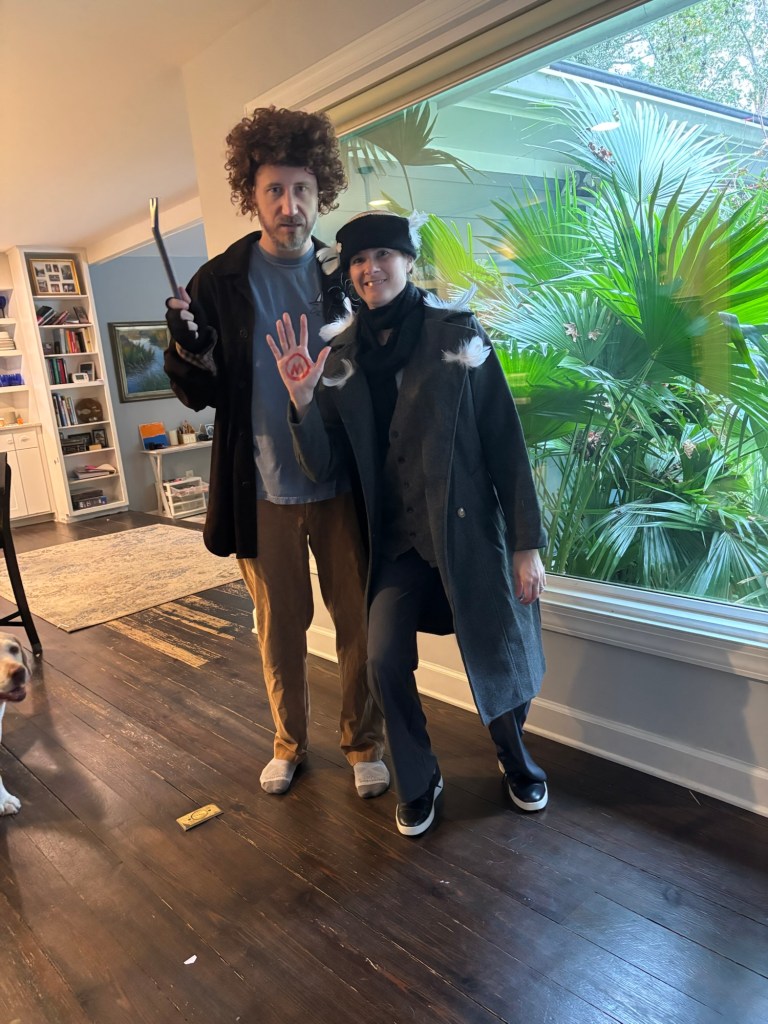
Danyelle was discouraged to the point of suggesting not dressing up next year. As usual she pushed a couples’ costume on me and marched us down to the corner of Creekside and Scotland, not knowing what a dud the gathering would be. We were the bad guys from the movie Home Alone. I did enjoy carrying a little toy crowbar, scowling, and telling people that I hate kids, but none of the neighbors I actually wanted to talk to were around. In a strange twist, the host couple, whom Danyelle had privately made fun of earlier in the day, also went as Harry and Marv. Tension permeated the event, and Danyelle and I wondered how much of it had to do with the argument over the HOA boat landing and the $3,500 “special assessment” the board is pushing.
Stranger still than the downtick in adult camaraderie was the big drop off in the number of kids in the streets. Surely, neighborhood politics are not to blame there. Could it be that our little community has gotten older so fast? I took Sammy on a golf cart ride after dark, and the stretch of road alongside Shem Creek that in years past would have been hardly navigable was all but empty.
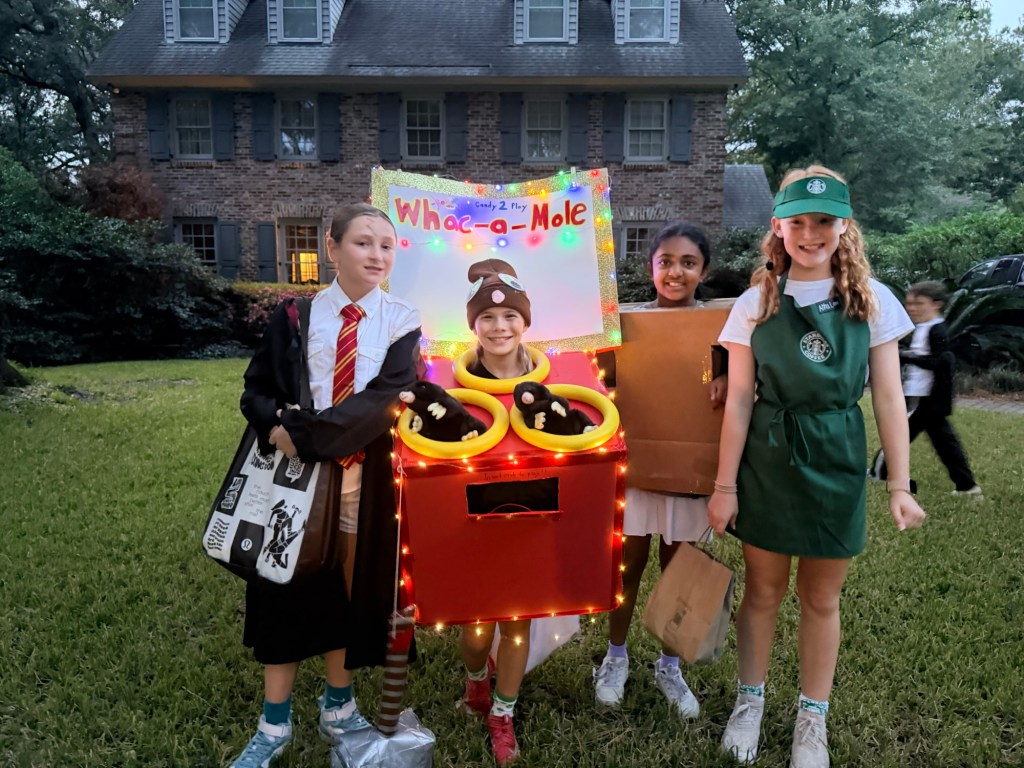
The bright side of this rapid aging was that we knew so many of the kids who came to the door, former toddlers whose parents used to escort them, now tweens on the loose. The older Pigg boy showed up wearing a LaNoriss Sellers jersey, and I pretended to be a Gamecocks fan. “You like South Carolina?” he said. Who doesn’t? Vivian Whitener went as a whack-a-mole. Scotty and Cartter were back by the time Grace Henney and her friends rang the bell, and after Scotty doled out candy (a job he relished), Grace asked him if she could come in and use the bathroom. Many small, entertaining conversations were had with young acquaintances.
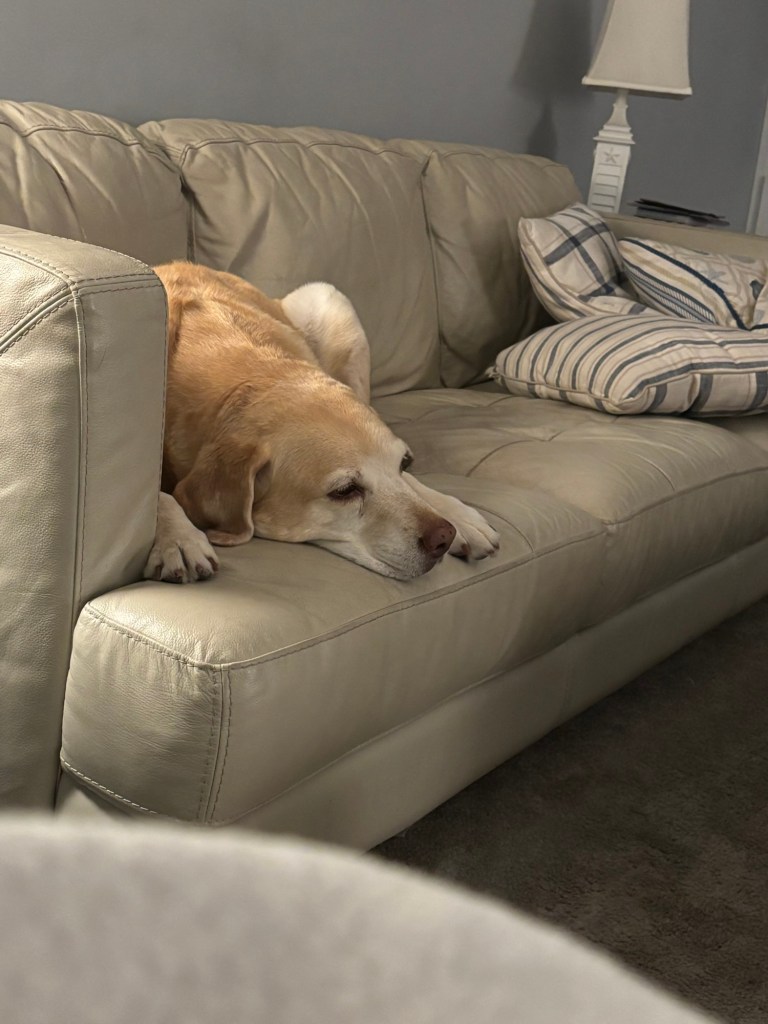
Sammy, who three years ago lamed herself jumping over the back of the couch on Halloween, was much less perturbed by the slower-than-usual pace of trick-or-treaters. She had a more or less leisurely night, helping to answer the door and going so far as to stick her head fully into a stunned little girl’s sack. All told, after what we’d expected would be a record turnout with Halloween falling on a Saturday, we ended up with about ten pounds of candy that went undispersed.
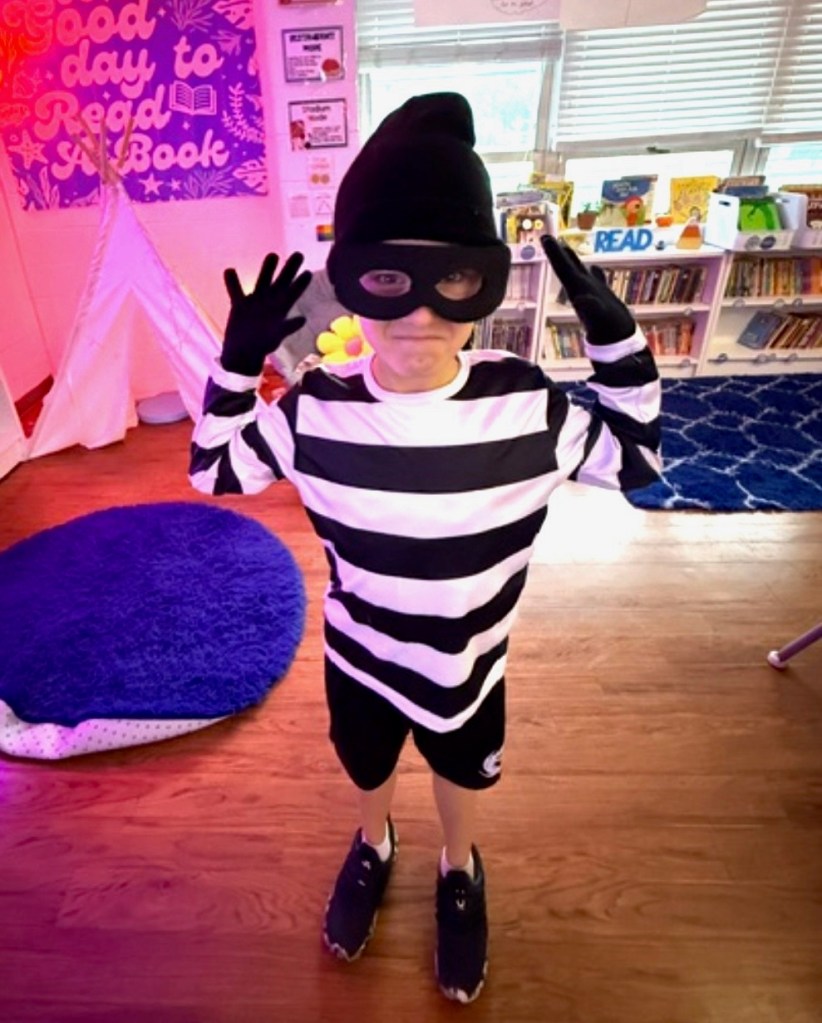
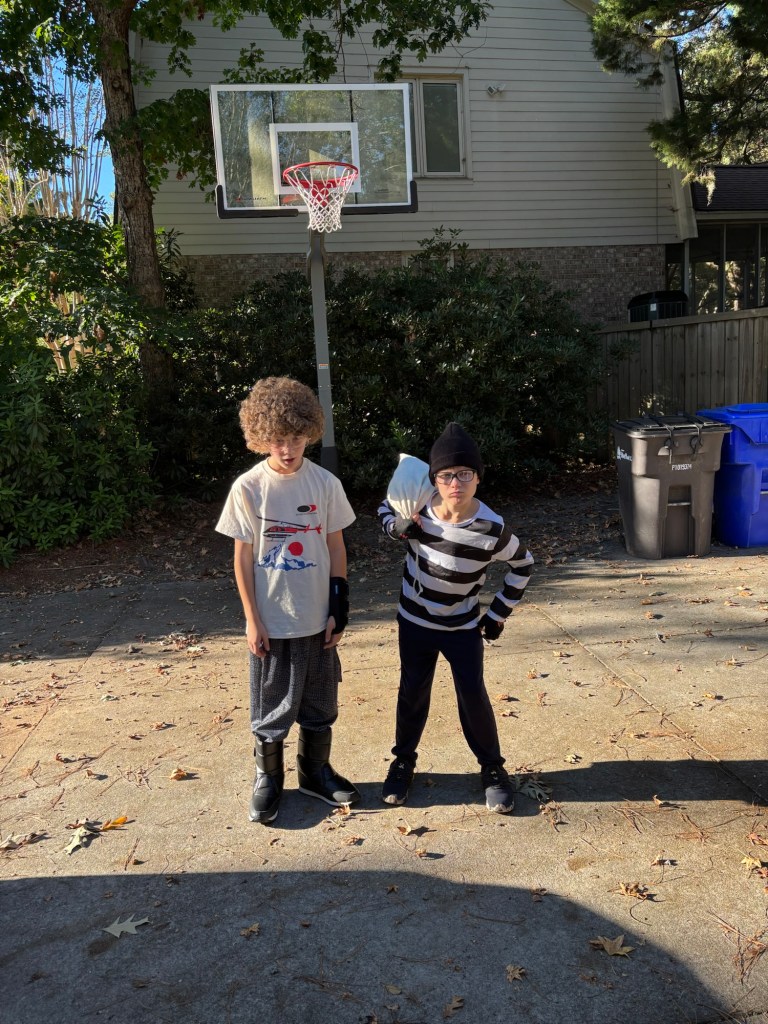
Like Sammy, Cartter and Scotty were unbothered by the leaner crowd – all their people were still out in the streets, and they had a full day running with their bros next door in the leadup to the main event. They played a trick on us halfway through their rounds, ringing the bell so we’d come to the door only to find our own children standing there waiting on us, Cartter dressed as Napoleon Dynamite, Scotty as a burglar. They spent ninety minutes, maybe two hours out and about, and to the ten or so pounds of leftover candy we overbought, they added another ten of their own, dumping it out on the dining room table to pick through as is their custom. When I asked if they were going back out, Cartter told me no, they already hit all the houses.
Though they may not have been bothered by the smaller crowd, the boys did seem affected by a creeping nostalgia. Knowing as they do by heart what each house gives out every year, Scotty drew up a little map that looks like a monopoly board to plot their course. When we were all out walking the dog, and Danyelle and I instructed Cartter and Scotty not to go to the creepy guy’s house on Equestrian (that’d be the guy who tugged on Scotty’s costume last year, who may or may not have beaten his ex-wife, and who had the cops called on him for fornicating on his front porch), Cartter asked, “Can we go to this house?” indicating another home on the same street.
“Yeah, those people are nice,” I said.
“Yeah, and they have a nice dog,” he added.
I guess I didn’t have to tell him, but I thought maybe he should know: “That dog died,” I said. When Cartter asked how old it was, I told him about the same age as Sammy. Upon learning this, Cartter ran off ahead in search of a hiding place from which to jump out and scare us.
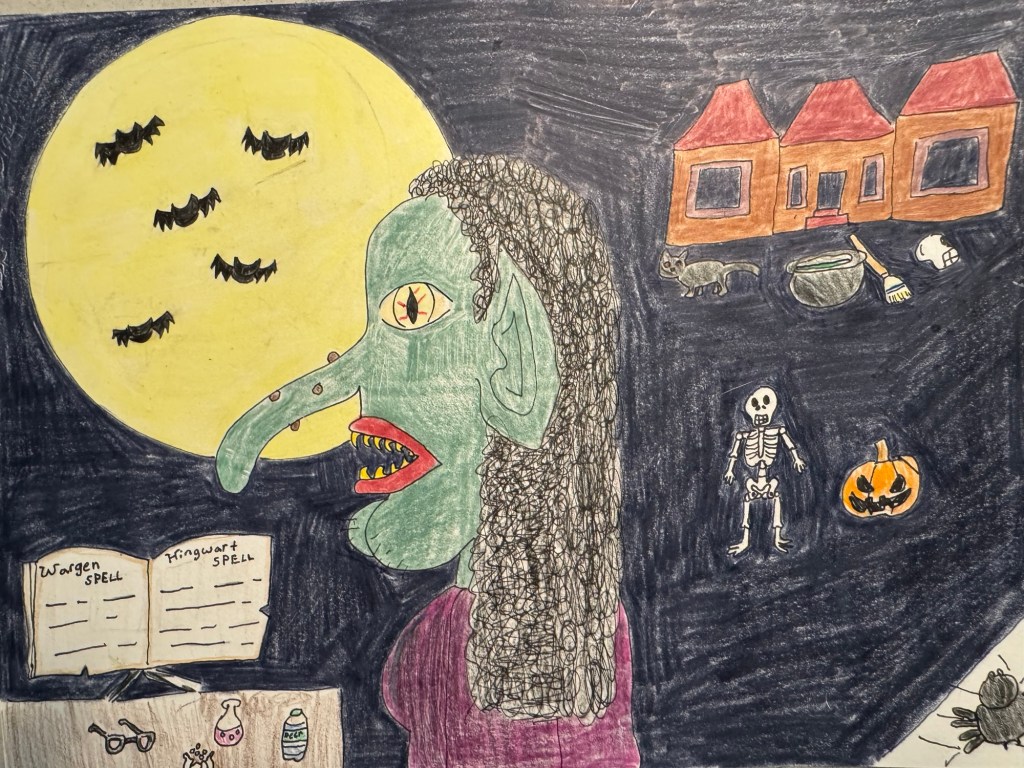
An unforeseen attachment to the kitschy decorations that dot our front yard offered further insight into the boys’ affliction. I never imagined the junk that Danyelle has accumulated over the years, the skeletons and pumpkins and witches, would become the long-lasting possessions they have, but were I to suggest chucking any of it in the garbage, Cartter and Scotty would no doubt lose their minds. They were very useful in setting it all up, even enlisting the neighbors’ help, and Scotty was saddened to have accidentally burnt out the battery on a glow-in-the-dark pumpkin. Danyelle participated in the annual “Jack and Candy” display, posing the two communal skeletons as Hitchcock and his leading lady from The Birds. Again, the boys were a big help.
Halloween may have passed with less than the usual hoopla, but I can’t honestly claim to be over it or immune to the boys’ sense of nostalgia. Cartter and Scotty can have their skeletons and the old witch that causes Sammy to bark when passing the front door. Of all the crap that annually reemerges from the shed, I most enjoy the eyeballs, which each year sit loosely atop bunches of black stalks like grass plants lining the path to our front door. There are little solar panels affixed mid-stalk, and after a day of soaking up rays, a sensor turns the balls on, and they blink green and purple. Each evening on my drive home from swim practice, making my way past the sparse and tired decorations on our street, they greet me during the weeks before Halloween, little beacons of hope at the bottom of Scotland Drive, guiding me home. “We’re here!” they seem to say. “We’re trying!”
Relax
Scotty helped Cartter hijack my talk after practice, the one when I asked the kids if their parents would listen to me. After Cartter made his little comment, Scotty appeared scurrying in and out of the circle of children, saying “Not this guy, he won’t listen,” and motioning his thumb at me. Suddenly, our silly family dynamic was on display in front of the athletes, and looks of restrained amusement ensued. I’d like to think it contributed to a sense of ease.
I’ve been telling the swimmers at practice they deserve to do well, that they deserve to feel good, encouraging them not to talk negatively about themselves or the sport and its rigors. We watched a video of Kate Douglass doing an interview after winning a gold medal in the 200 breaststroke in which she said, “I knew if I executed that race well, I would win it.” Asked about nerves mounting during the days before her swim, she said, “I knew there were good things coming, so I kind of tried to just relax and, you know, get excited for my teammates.” Knowing good things are coming and enjoying one’s teammates are without a doubt powerful salves against the anxiety that so often plagues swimmers.
At the meet I told the team on Sunday, “We have a few hours here together; now, let’s have a good time.” That comment drew nods of approval and some sincere applause from the older boys in particular.
Even a great athlete like Kate Douglass isn’t that far removed from being a little kid like Scotty, flinging himself into the pool to start practice with little regard for anything but pleasure. After that gold medal swim, Douglass’s interviewer handed her a rubber duckie, referencing her childhood club team. “It’s kind of like we’re back in age group swimming,” Douglass said.
“Pay attention to the ways you guys are the same as her” is what I told my practice group.
Song and Dance
Lately, I’ve enjoyed playing the electric piano in Scotty’s room at bedtime and singing to him when I say goodnight. Back when he was smaller, Danyelle sang him “Good night, good night, I love you, it’s time to go to bed . . .” a little ditty she made up, and I would sing, “Go to sleep, go to sleep, go to sleep little Scotty” to the tune of Lullaby and Goodnight. But now that Scotty is eight, I like to tease him with the lyric, “Shut up when you’re talking to me,” a twist on the Linkin Park lyric “Shut up when I’m talking to you,” from the song One Step Closer.
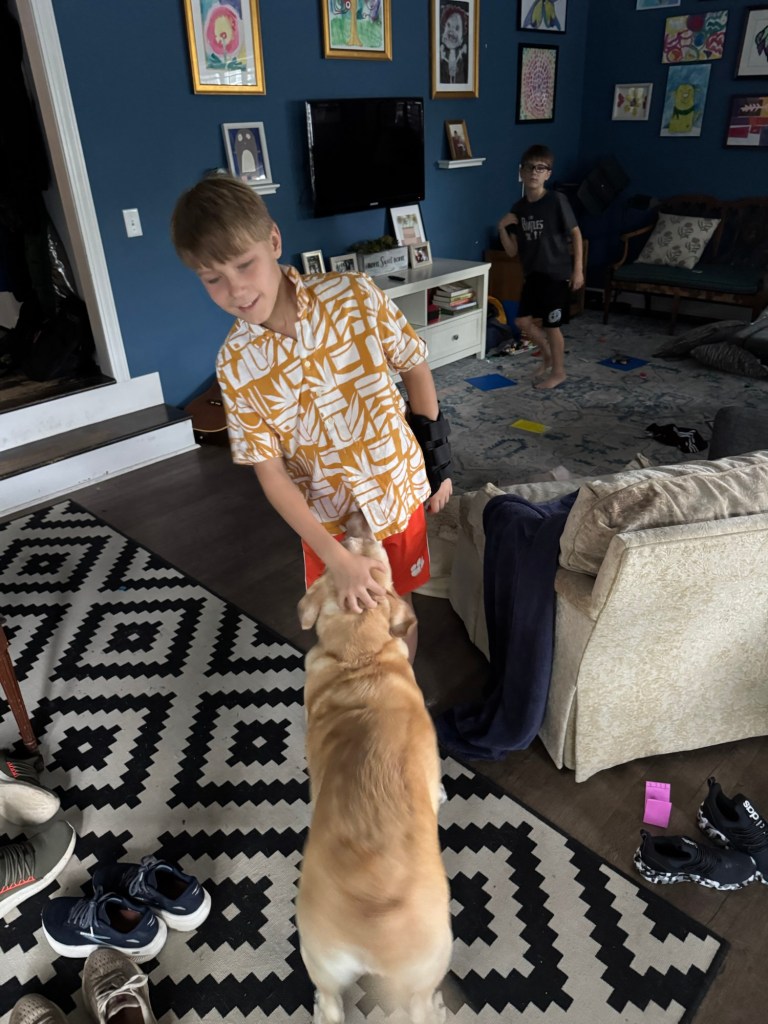
Scotty’s ears perked up when I played the song over the Sonos one night when we came home from dinner at nearby Sesame. An ensuing pillow fight was set to the tune of Rage Against the Machine’s Killing in the Name, a song with the climactic refrain, “Fuck you, I won’t do what you tell me!” Cartter used his wrist brace as a shield and deployed a blanket that he referred to as a “reusable bomb.”
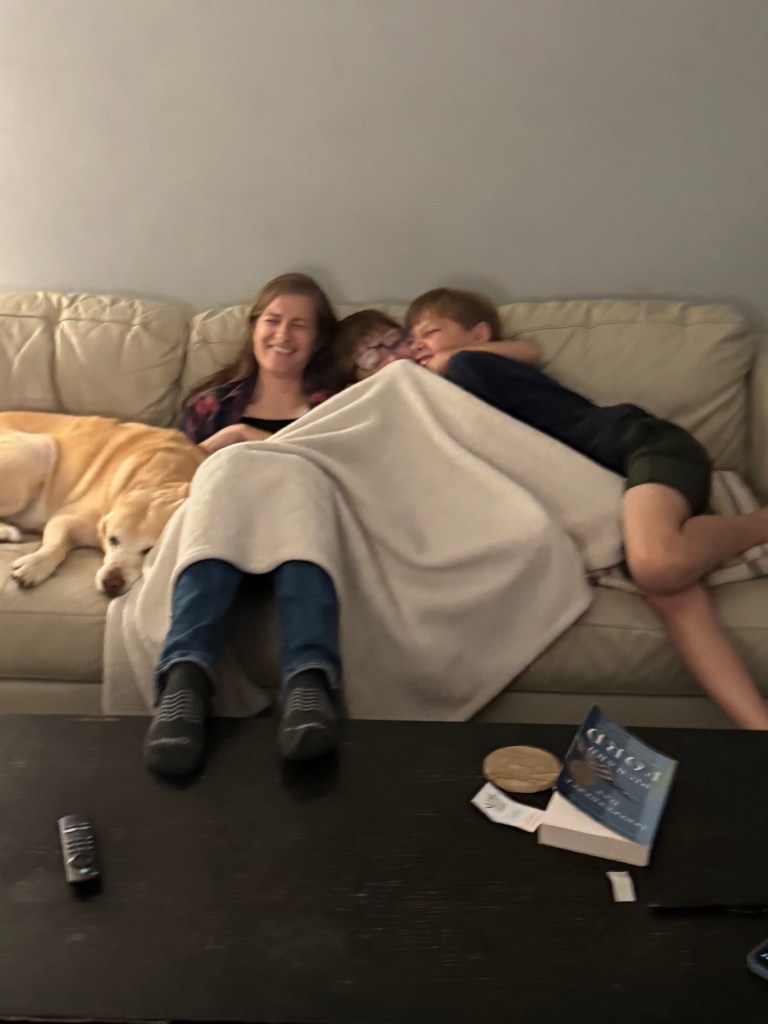
After another Sesame dinner, the boys played the card game “Play Nine” in the living room with their mother, and I repeatedly interrupted to drag one at a time over to our little kitchen dance floor and twirl them in circles while Wynton Marsalis’s Lincoln Center big band ensemble played The Music of Wayne Shorter. Scotty liked to plant his heels in one spot and spin like a top, also to lift his feet off the ground in hopes that I would hold on and swing him through the air. The sight of his and Cartter’s faces with the lights circling behind them was beyond gratifying. At one point Scotty paused to instruct me on a proper sequence of moves.
After all this fun on the dance floor, the kids’ tongues were loosed, and they told their mother and me all about some of their naughtier exploits. Scotty delved into his relationship with a boy named Wake at school. “I kind of hated him,” he said, explaining that he was glad the kid moved away, and that he was only friends with him because of a “chain” of friendship that linked them. “I’m friends with everyone [in the chain],” he said, “but really I’m friends with Stone.” Scotty then told us the story of when his real friend Stone told him to “get your fuckin ass outta my face,” when Scotty tagged him at recess. Apparently, everyone was very concerned for Stone afterwards, but only one level-headed classmate asked Scotty if he was alright.
There was some discussion of a fat boy on the summer league team who is unduly confident and who once said Scotty had “tom-ah-tuh sauce” on his face.
But the cous de gras was the tale of Hiller flashing the bird and mouthing “fuck off” in the rearview mirror while driving the golf cart ahead of who he thought was Cartter, but who was in fact, Buddy. That and the story of repeated crashes into the ditch at the turn into the Fish Fry drive, each miraculously ending with the boys excavating the crashed cart.
Bad Dream
Walking home from dinner one night, I asked Cartter when he wanted to get back in the water. “Today,” he said, as if we could go scale the fence at the neighborhood pool and get in a workout in the fifty-something degree darkness.
I kept him out two-and-a-half weeks. Then he swam Wednesday and Thursday. Both times he swam with the brace, and both times he was the first one in the pool. I only let him stay in a little over ten minutes each time. So far, no pain. Next week, he’ll try to go without the brace.
During Cartter’s little break from the pool, he attended a couple of school events that he might not otherwise have, and he scored a little extra time with his friends the Rivers next door, but safe to say he’d probably liken his experience of being restricted from swimming to that of falling off the dock: “It was like a dream,” he said. “I was like, this can’t be happening; it must be a dream.”

