
In the leadup to the State Championship swim meet, I kept on trying to explain to people the unlikeliness of my son Cartter’s event lineup, particularly the rare combination of youthful inexperience and high stakes that would kick off his weekend. “South Carolina Swimming Age Group Champs” in Greenville would be his first travel meet and his first state meet; at nine and a half years old, he’d be among a small handful of the youngest swimmers competing; and in the first event, he’d be in the fastest heat in the center lane, swimming leadoff for a medley relay team that was seeded first. Ironically, my mom was the only person who seemed to get it. “That really is crazy,” she said. For me, it was a satisfying, if somewhat overdue acknowledgement.
I was barely older than my son is now when I confessed to my mother that the nerves I endured over the course of a meet were too much to bear. She was leaning over the counter beneath the kitchen’s harsh overhead lights, making a breakfast I knew I wouldn’t be able to eat, my stomach clenching at the smell of it. Scared and ashamed, less than an hour before my sister and I were supposed to be at the pool across town for warm-ups, I asked if I could quit competing and swim only in practice. Mom laughed, and, feeling ridiculous, I returned to my room, undressed, and put on my suit. In the years to follow, trying to conceal my unease during swim meet weekends was a constant (and losing) battle; Mom’s attitude toward my nervousness fluctuated between dismissiveness and frustration; and I ended up getting more and more afraid. Not exactly a recipe for achieving peak performance.
It needs to be said: swim meets are brutal tests. Sustaining maximum speed for one to two minutes in the water is a massively draining feat, one that some athletes might attempt up to twenty times or more over the course of a three-and-a-half-day championship meet. On each occasion they’re flanked by competitors who want to beat them, and they’re watched by hundreds of cheering onlookers, most of whom are rooting for someone else, but some of whom have nothing but the highest hopes for them. Throw in hotel stays, crowded early-morning sessions, the miles and miles of warm-up and warm-down, and the cumulative effect of a meet is one of utter depletion, physically and mentally. Extensive training doesn’t make the task easier either. It makes swimmers better at emptying their energy reserves. As swimmers train harder, set more challenging goals, and devote more of themselves to the sport, meets become more difficult. It’s normal, for any athlete, at any level, to be nervous.
The nerves build slowly heading into a meet. As a kid, I lay awake nights trying to soothe my worry by thinking of all the days separating me from a big swim, knowing that inevitably I’d end up on the starting block, feeling as if no time had passed at all. As a coach, I see now that I wasn’t necessarily unusual in this regard. There are some athletes who go about their business seemingly unbothered, strutting and grinning all the way up until the final seconds behind the blocks, but these are the sports’ oddballs. More often, signs of nervousness are everywhere during meet week. Some swimmers start talking more excitedly on deck at practice. Others clam up. Others get choppy and hurried in pace sets, and I end up having to lie to them about their times to prevent them panicking. When I ask kids if they’re starting to get nervous, they nearly always say yes.
My mom always acted like there was nothing to be nervous about. She tried to feed me greasy fast-food breakfasts and tuna sandwiches loaded with mayonnaise, and then she’d be mad when I couldn’t eat, madder still when I got sick. Just as my sense of dread wasn’t unusual, neither was her response. When parents witness a child struggle with nerves, the impulse to minimize or deny can easily take over. I told a dad after practice one day that his daughter was starting to get nervous, and he said, “Really? She never gets nervous.” Just minutes beforehand, when I asked the swimmer if she usually got nervous before the meets, she said, “I always do.” During the recent state meet, a coaching colleague bemoaned his son’s so-so finals performance, complaining of the athlete’s failure to eat appropriately between sessions. I’d watched the kid stand like a deer in the headlights behind the blocks, stiff and scared, and I told my colleague that harping on eating wouldn’t help: the reason he wasn’t eating was because he wasn’t managing his nerves.
I’ve caught myself falling into the parental trap of dismissing my child’s perfectly normal fears a couple times, and on each occasion, I’ve thought of my mom and quickly course corrected. I don’t want my son to think there’s something wrong with him because he’s worried about failure. So I tell him about the times when I was nervous as an athlete; I tell him that I still get nervous as a coach; and I don’t miss an opportunity to lighten the mood with a joke. Managing the stress during meet week isn’t easy. Relaxation techniques and proper perspective are key tools. For most athletes, those tools have to be learned over time, but that learning won’t happen unless kids are allowed to be nervous in the first place.
The worst thing an adult can do in response to a nervous child is get upset. It was tempting to worry and get frustrated when on the day of Cartter’s big race, he showed up at the pool looking like he hardly slept the night before. His teammates were much the same. I looked in their tired eyes and asked what they ate for lunch. One boy, the star of the group, said he had oatmeal. I knew they were handicapping themselves. Certainly, I was nervous for all of them, but I also trusted them to do their best. We swam a little extra in warm-ups; I told a few jokes and led a team cheer; the rest was up to them. Cartter did his job in the opening leg of the relay, and his team won in thrilling fashion. As the race neared the finish, I was jumping up and down behind the row of coaches, pleading for the anchor leg to hang on when it looked like the boy in the next lane would run him down.
At the same time, my mom was on a trip to Nashville, checking her phone for updates on Meet Mobile. Fittingly, she was sitting down to lunch when Cartter was about to jump in. Over thirty years had passed since that morning I confessed to her in the kitchen. Now, it was her turn to make a confession. She looked at my stepfather and former coach sitting across the table and, surprised at herself said, “I can’t eat.”
For a kid, stress management is hard enough without their adult role models getting overly worked up. Knowing full well the effect she’s capable of having on her progeny, T.J. looked back at my mom and said, “Remember this moment. This is why you can never go to a meet.”
State Meet
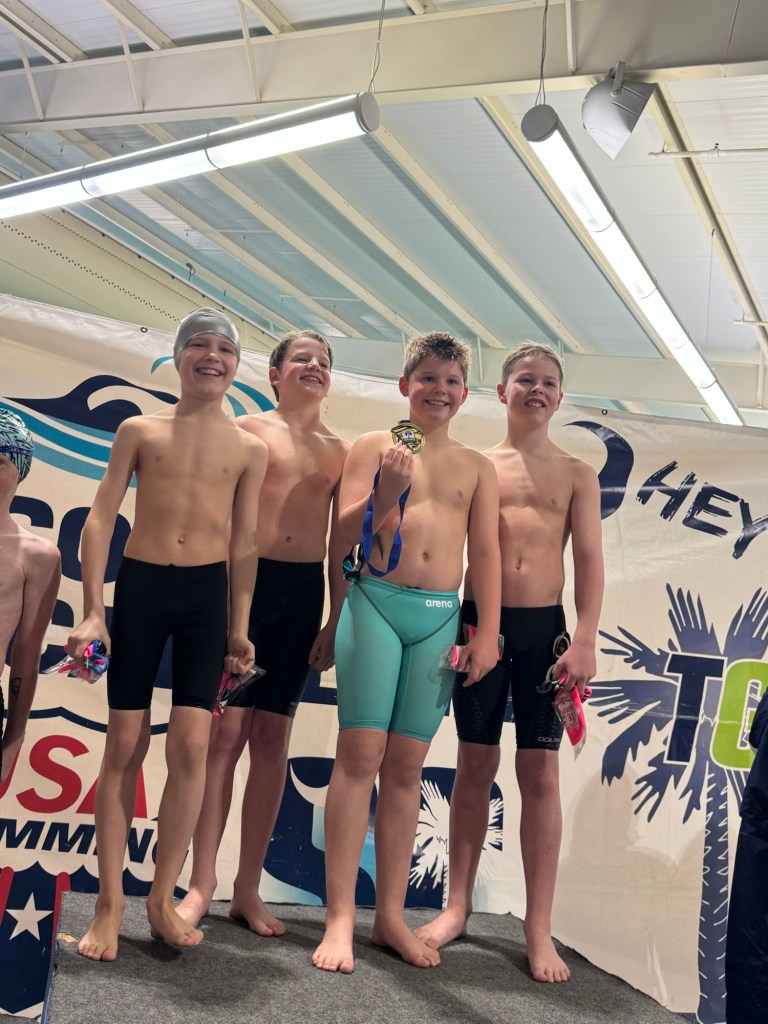
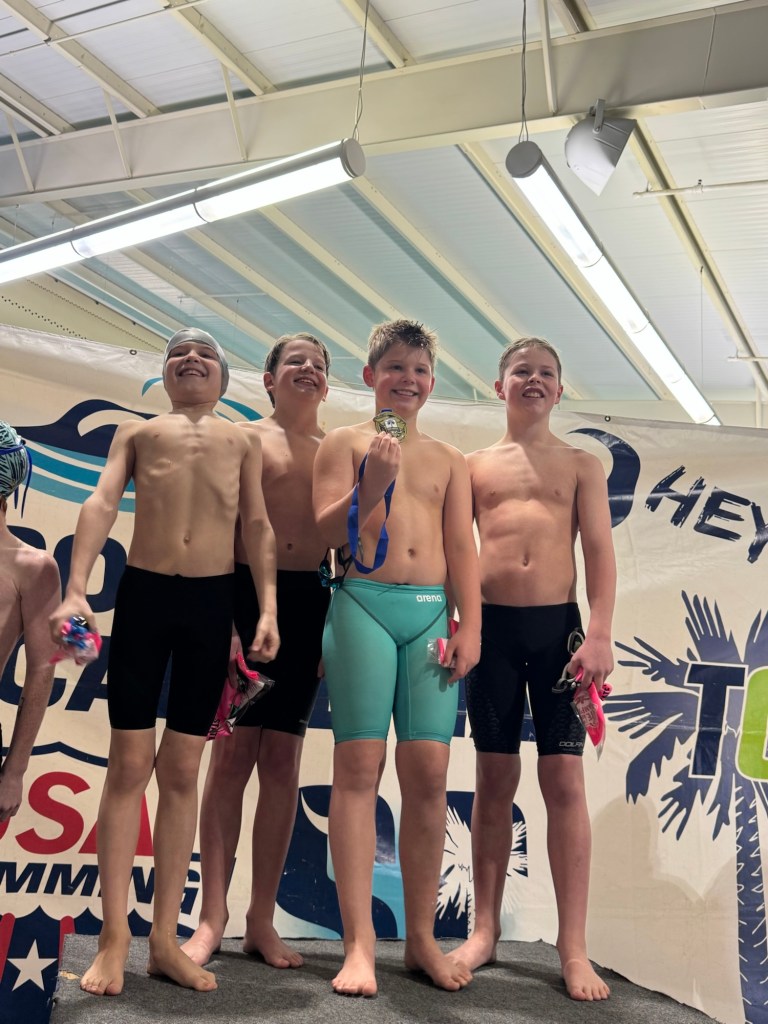
The medley relay was one of ten races for Cartter that weekend. In his individuals he went mostly best times, hauling in a seventh-place finish in the 50 back and a third-place finish in the 100 back. He was the top nine-year-old in both events, and the 100 back swim earned him a trip to the podium where he had a medal hung around his neck and got his picture taken. His teammate finished first, and Cartter was elated.
After the race, he walked over to where I was standing in the coaches’ area, still dripping wet and breathing hard, and asked with some incredulity, “Did I get third?” He later told his mom that he thought the scoreboard must have been in error when he saw the “3” next to his lane.
“Yeah,” I told him.
He pumped his fist and said, “Yes!” Then, the excitement in his voice building, he asked, “Did Hamilton win?”
“Yeah,” I said.
Again, he pumped his fist, this time with even more enthusiasm. “Yes!” he said.
Danyelle reported that her nerves were shot. She made the critical error of inviting her dad to come and watch Cartter’s two sessions and to hang out during the day on Saturday. So on his birthday, Valentine’s Day, Randy hauled his girlfriend to Greenville and set about bothering his daughter with his usual neediness and embarrassing behavior.
Scotty was none too pleased with all the time that was spent sitting around waiting to watch Cartter swim, nor was he happy about Grandpa absorbing so much of his mommy’s attention. He demanded that she leave the pool area to entertain him, and at one point when Danyelle stepped out with him, Randy seized the moment to make something of a scene in the parent bleachers, complaining about a coach from Rock Hill’s annoying whistling. I was quick to point out to my dear wife that I told her so.
Bad Babies
I’m in the habit of calling the kids “baby wabies.” I think it’s a lot funnier than they do, but only Scotty seems to mind. He asked me one night in his low, mumbly tone why I call him and his brother babies. I told him I did it because they are my babies, and I have no plans to stop.
That night Cartter asked me why my parents got divorced. He wanted to know if his mother and me would get divorced. I said we wouldn’t, and he said, “but your parents and mommy’s parents got divorced.” I told him none of our grandparents got divorced, so the fate of Danyelle’s and my marriage wasn’t necessarily purely up to genetics.
Then I told him that I hope he has kids when he grows up, because it’s the best thing in life. He said, “What if I marry someone who doesn’t wanna have kids?” and I said, “Don’t.”
Then he said that if other babies had come out of his mommy that I’d probably tell them I loved them the most, and I said maybe not – maybe they’d have been bad babies. He said, “Bad how?” and I said, “I don’t know.”
“Bad like asking too many questions?” he said.
“Yes,” I said, and we told each other goodnight.
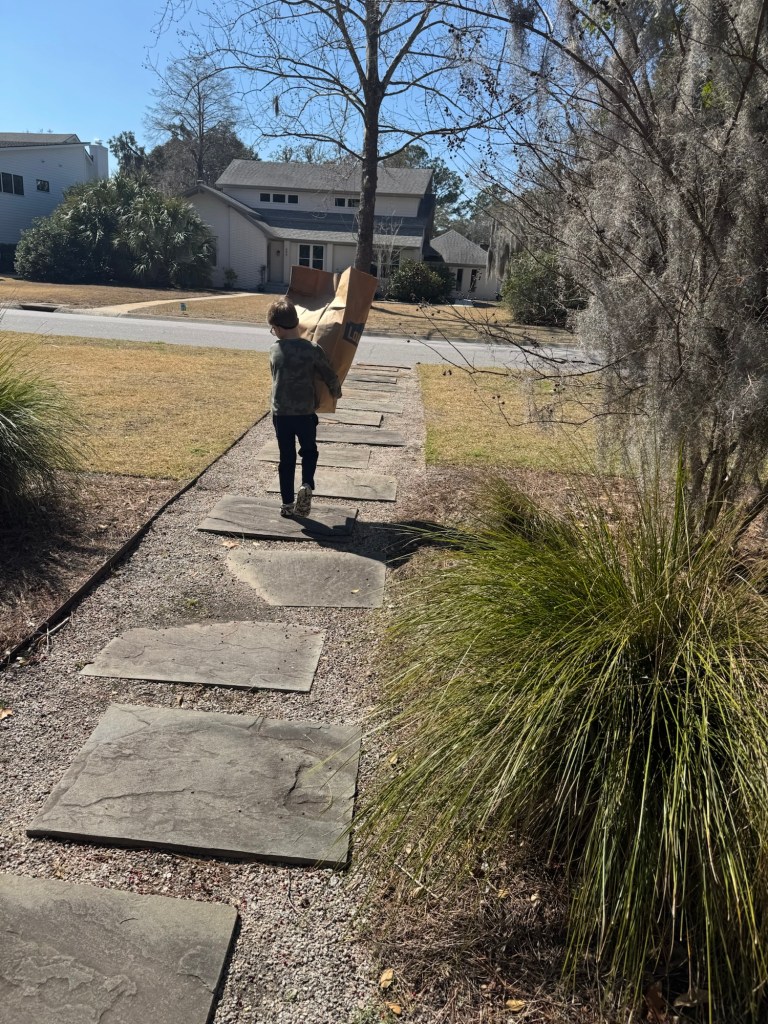
Boys’ Weekend
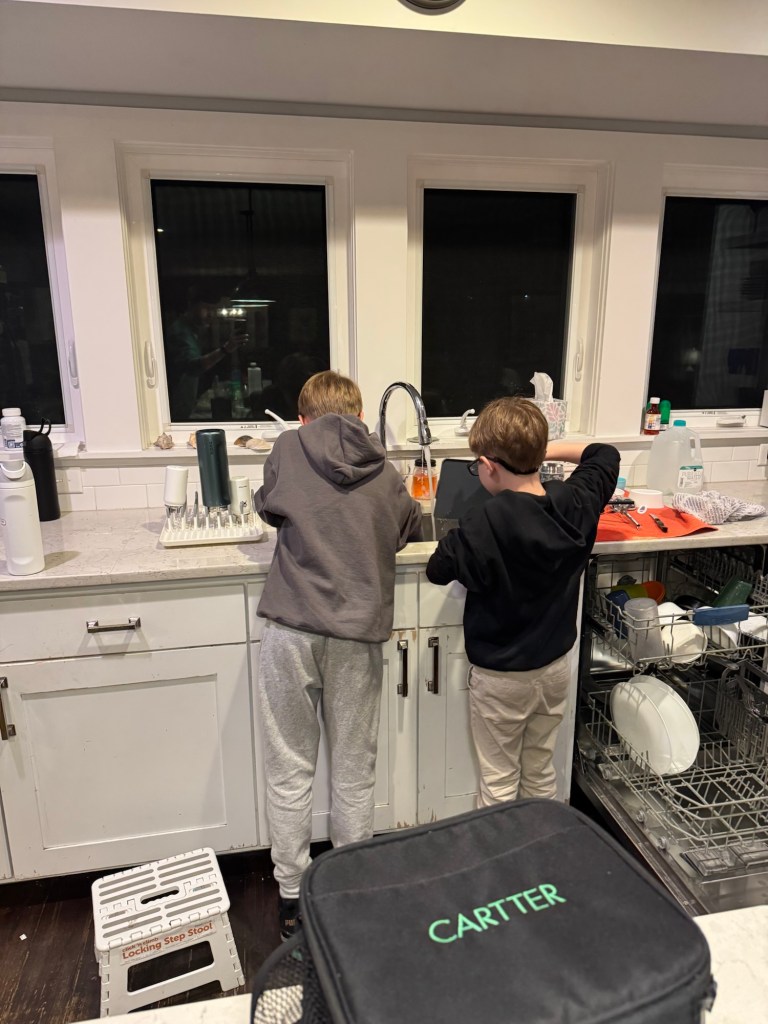
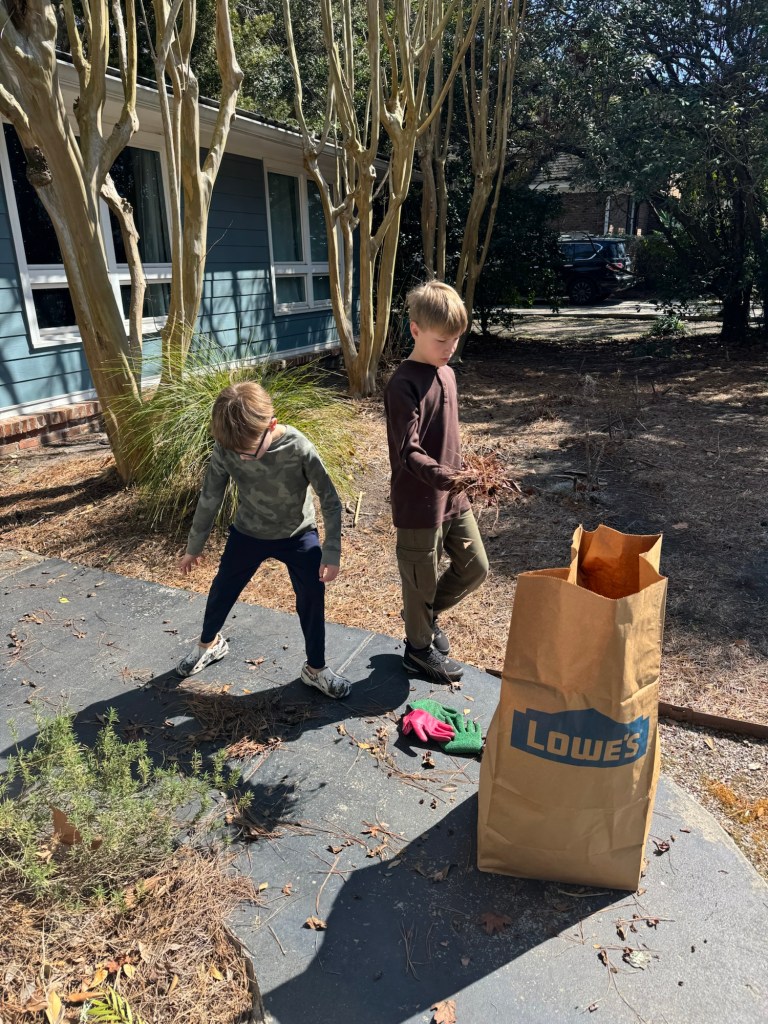
The weekend after the state meet, Danyelle headed out to an Airbnb in Park Circle to dress up like Britney Spears and sing karaoke with a collection of girlfriends and family. Naturally, her mother and siblings tried to make it all about them, logistics were a challenge, and Danyelle was stressed out. Meanwhile the boys and I had a great time.
A walk to Coleman Public House is a surefire win, and that’s how we kicked things off on Friday night. I was surprised by the way the boys are able to keep up with me now, having expected to stride along in front of them while they fell back, distracted by their private conversation and limited by their little legs. Instead, they walked right alongside me, and closely, so that I kept having to go around to the other side of them, lest they steer me off the road and into someone’s bushes. We talked about the odd teachers at their school, and I explained that the reason the guidance counselor Mr. Wey is such a jerk is that he has a little baby penis. Cartter and Scotty asked how I knew, and I said, “Because of how he acts,” and told them never to allow themselves to be in a room alone with him or any of the adults running their school.
Once we were seated in the dining room at Public House, I put an end to the ensuing conversation about what constitutes inappropriate touching. The boys understood. “Because we’re in public?” Cartter said. Then, they turned their attention to the tall glass of German pilsner I ordered. They wanted to know what would happen if I drank two beers and what would happen if I got drunk. I told them we would walk home just the same as if I weren’t drunk, only it would probably be a little more fun.
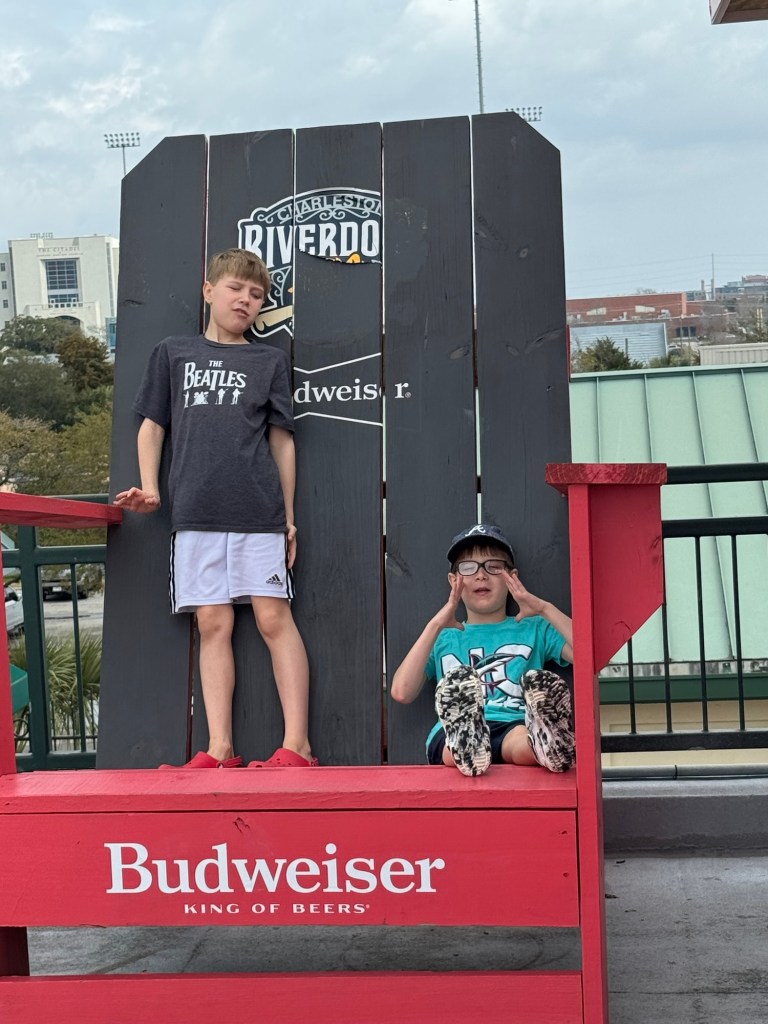
The next morning, I discovered that the Citadel baseball game had been moved back from 5 p.m. to 11 a.m. and decided to make a move. After a brisk dog walk, I asked the boys if they were interested, and they jolted upright, unsure whether I were serious. They threw on crocs, and we flew across the bridge in the minivan, arriving in time to see the Citadel’s leadoff man leg out an infield single in the home half of the first.
The Citadel plays its home games in Joe Riley Stadium, home to Tampa Bay Rays’ Single-A affiliate the “Riverdogs.” Back in my twenties, my friend Matt and I would sneak in beers in his girlfriend’s purse and sit in the left-field bleachers for Riverdogs’ games. That was when tickets were $4 apiece and Tuesday nights were buy one get one free. Empty seats were everywhere back then. One was able to breathe, talk to the people in the surrounding seats, and feel a part of the game. One time my sister and I were practically the only people in the stadium late in a rain-delayed extra-inning affair. I gave the home plate umpire so much grief about tossing a player and hounded him so relentlessly about balls and strikes that he nearly lost it, stopping the game for a moment to turn and point at me threateningly. Things are different at the Joe now.
For one thing I dare not heckle the umpire or the opposing players for fear of all the surrounding fans’ concern regarding their precious babies in attendance with them. The place is seemingly always packed, filled with bored transplants from the Northeast and Midwest and their moronic brood. Back in the day, I went to a game that was promoted as “Go Back to Ohio” night, and one lucky fan won a free bus ticket to Columbus. That type of un-pc fun doesn’t fly anymore. Ownership is too keen on capitalizing on the area’s booming growth. These days, cheap seats are $12; getting in the stadium is like going through airport security; and worst of all, the music is turned up to eleven and blares nonstop the entire game long.
In some ways going to see the Citadel is like stepping back in time. Nobody “from off” is going to a Citadel game except the visiting team’s families. There aren’t any kitschy promotions between innings like “Go Back to Ohio” night, but a person can walk right up to the ticket window, go through the gate, and sit anywhere they want. The only music that plays are the short bursts of the home players’ walk-up songs, and the feeling is much more like the relaxed days of twenty years ago than today’s frenzy of desperate noise. It’s like going to a ballgame, a day at the park, instead of a concert for the terminally ADHD.
In the early innings, the boys and I sat behind the visitors’ dugout on the third-base side amid the green-clad Marshall fans in from West Virginia. I hushed Cartter from cheering too loudly while across the infield the Citadel players leaned against the top rail of the dugout and mercilessly chattered at the opposing pitcher when the leadoff man got on third. A wild pitch and a run ensued. The Citadel boys continued their barrage of chanting and barking and hollering pretty much nonstop, and by the end of the third were ahead 4-2. At that point, the boys and I went to get hot dogs.
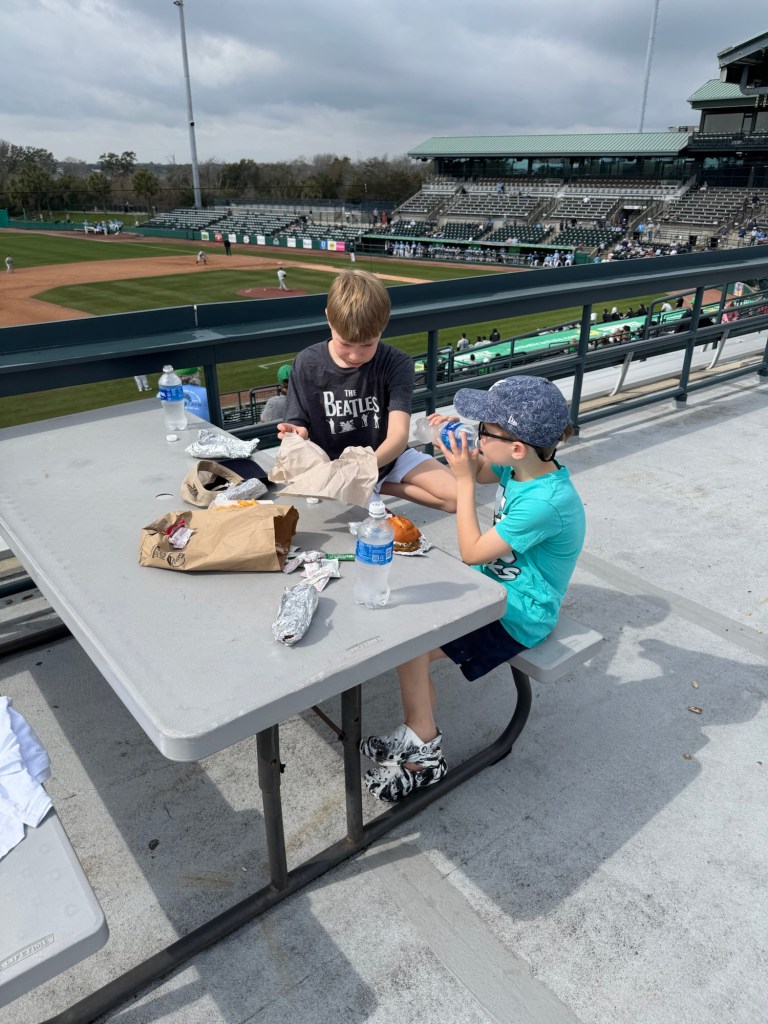
For the middle innings, we sat up above the bleachers on the deck, laying our food out on a picnic table in the sun. Views of the Ashley River, the Ravenel Bridge, and downtown’s many church steeples could be seen all around, and Scotty said that while he doesn’t usually like heights, he liked being up in that section of the stadium.
We eventually retreated to the ample available bleacher seating beneath the roof to get some shade, and Scotty found two small tickets with the words “Admit One” printed on them, much to his sense of personal accomplishment and good fortune. Meanwhile, Cartter asked questions about who the worst player was. He suspected the cleanup hitter was no good for some reason, and I said that usually the weakest hitter bats ninth. Cartter found a program lying on the ground that listed all the players’ heights, weights, and positions, as well as their years in school and their hometowns. Nearly every Citadel player was from South Carolina. After I set down the program, I noticed from our lofty vantage point a young woman walking around the concourse in a form-fitting jump suit, and I couldn’t help but wonder what she looked like closer up.
By the seventh, with the score knotted at six runs apiece, it was time to move over to the home side of the field so the boys could try for a foul ball. With two outs, nobody on, and an 0-2 count on the number eight hitter, I thought to myself that it would be incredible if the home team rallied to score. Sure enough, the hitter worked the count and drew a walk, and after stealing second, the lowly ninth-place hitter whom I’d suggested to Cartter might be “the worst,” drove him in. He then stole second and raced all the way around to score on a wild throw from the pitcher to second base.
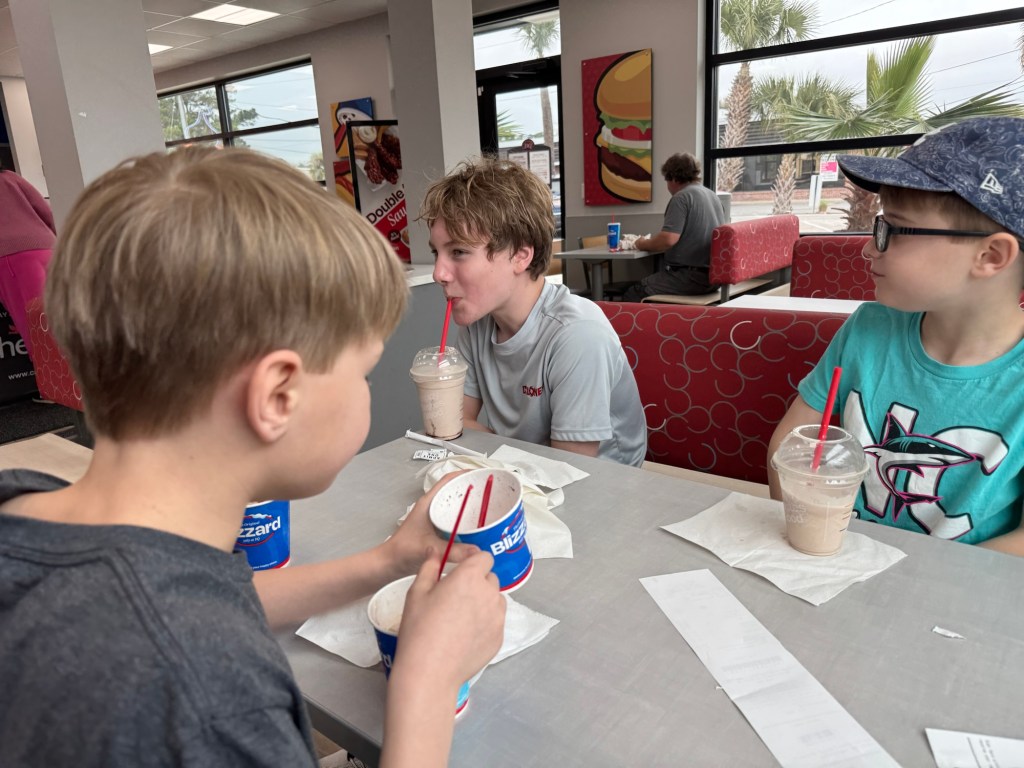
Then, after the Citadel took a 9-6 lead into the bottom of the eighth, up came the cleanup hitter, whom Cartter had decided “sucked.” He smashed a long homerun far over the wall in the deepest part of the park in left center, and when I turned to look at where Cartter was standing in the concourse behind me, I saw the woman in the jumpsuit bending over talking to him. Upon my approach, I heard her say sweetly, “Do you like ice cream?” Cartter stood stunned, shaking his head yes and no at the same time, and I intervened and said that yes, yes, we loved ice cream! The young woman was working in some capacity, and she explained that the team gave away a Dairy Queen gift card whenever they hit a homerun. Of the three-hundred or so people in the stadium, she had decided that Cartter was her desired winner, and when I looked at the back of the envelope she handed him, I was shocked to find that the card inside was loaded with $50.
Finally, on our way out of the stadium, the Citadel having won 10-6, we walked past a group of men who’d been leaning against the rail behind home plate, talking and drinking beer all game long, clearly players’ fathers. One of them was wearing a number twenty-nine jersey with the name Patel printed on it – the father of the ninth-place hitter who’d played such a crucial role in the team’s victory. “How bout that Patel!” I said, as we walked behind him. He turned smiling, seemingly ready to talk, and stuck his hand out at me. I gave it a vigorous pump, and all I could say was “Congrats.” I might be done with Riverdogs games forever.
Dance Party
One of the key ingredients to the boys feeling their weekend has been worthwhile is a family event following dinner on Friday or Saturday night. Often, these happen in the living room and involve some sort of game. Lately, we’ve introduced them to Scategories. They very much enjoy writing down words or sometimes just syllables that don’t match the category and then bullshitting the judge (me) into awarding them a point. Scotty in particular is quite good at acting miffed and offering a fake explanation when I deny him. He makes a face that says, “What are you some kind of an idiot?” and repeats the nonsense he’s written down, often using it in a sentence. Meanwhile, Cartter rolls around the floor in hysterical laughter, holding his crotch while he tries and fails not to pee himself.
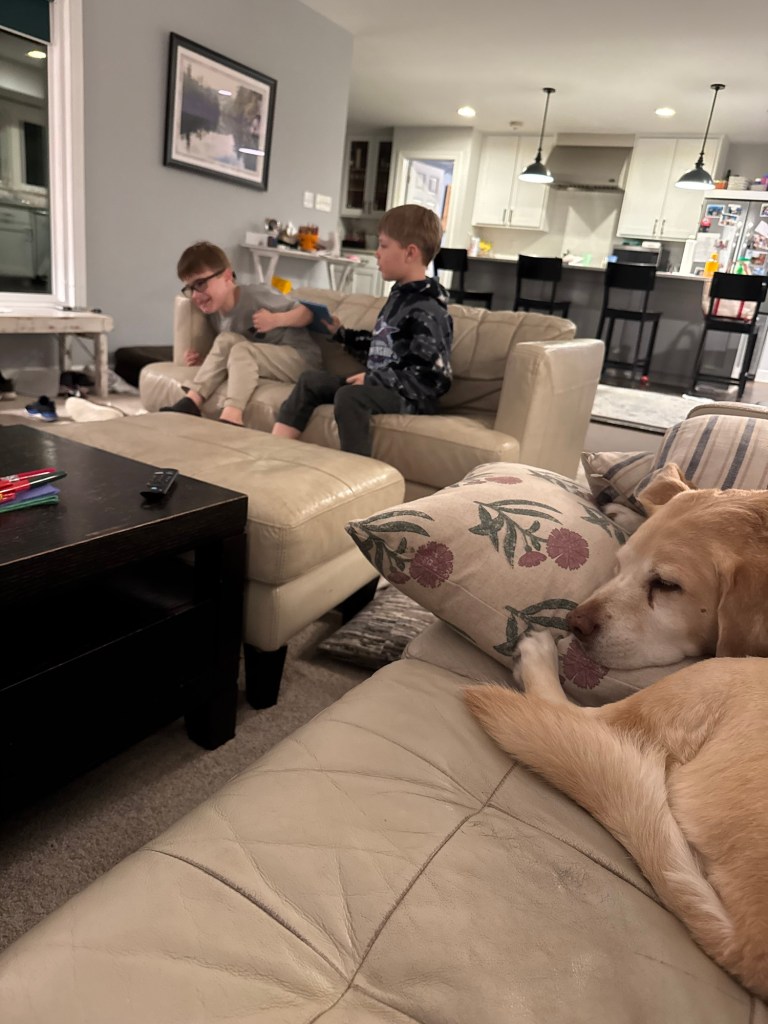
It’s all very entertaining, but the problem is that it often requires a lot of effort in the way of refereeing on the part of Danyelle and me. We were both relieved when on the weekend after Danyelle’s big Park Circle birthday party, we returned from another walk to the Public House, and Scotty wanted to listen to music and have dessert. Then, while Danyelle and I sat on the couch with Sammy, a dance party broke out.
Scotty’s efforts were reminiscent of his Dumbo ballet days (“He’s so serious,” said Danyelle), and Cartter’s wild flailing and marching about highlighted his rapidly growing limbs and his uncertainty about what to do with them. Dave Matthews Band was received with mild approval, and Bela Fleck was roundly rejected, but Average White Band’s “Pick Up the Pieces,” and a series of Curtis Mayfield numbers were big hits. Cartter eventually went to a move that looked like he was doing a football agility drill, and Scotty joined him. After about forty-five minutes, both were shirtless, red-faced, and sweaty. Perhaps the dance parties of the boys’ toddlerdom have returned for a while.
The Elderly
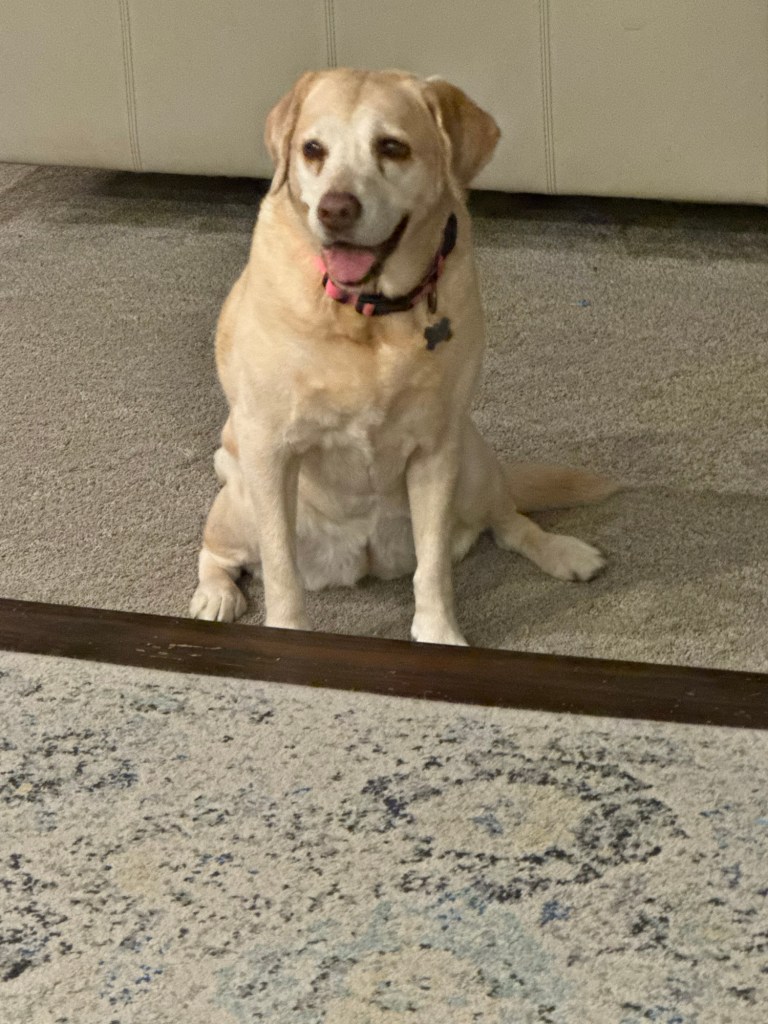
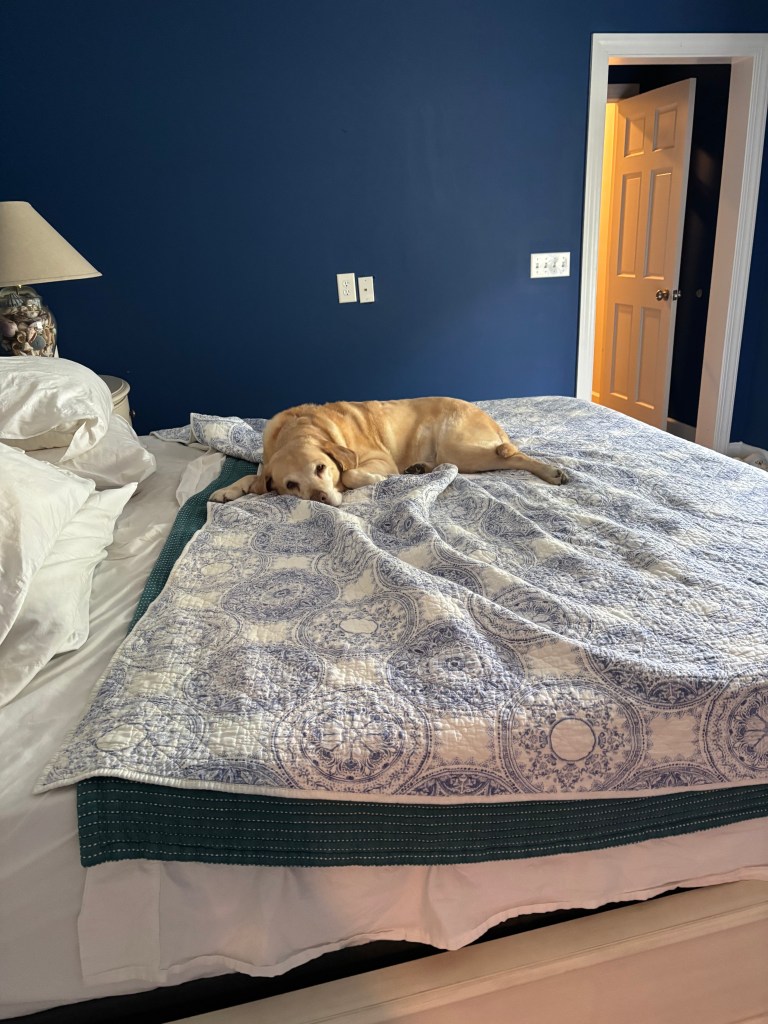
One of the ways the baby lady, aka miss lady, aka the old lady baby Sammy Watkins has adapted to her old age is an increased appreciation for golf cart rides. Long one to run alongside and in front of the cart or to stand anxiously on all fours on the floor of the cabin with back paws teetering dangerously close to the edge, she will now sit all the way down on her haunches for the entire ride home from the boat landing after a swim.
After one such ride during our boys’ weekend, I tried to drop her off in front of the house so as to avoid taking her over the steeply sloped curve of our driveway. The boys coaxed her out, but instead of following them to the front door, she stood next to the cart and followed close by as I edged away. She stood in front of the wheels when I reached the edge of the driveway, and when I swung wide, she took advantage and hopped back inside, not wanting to miss out on the last twelve feet of the ride, ultimately performing an awkward one-eighty in order to dismount on the steps leading to the side door of the house.
 The Raging Elitist