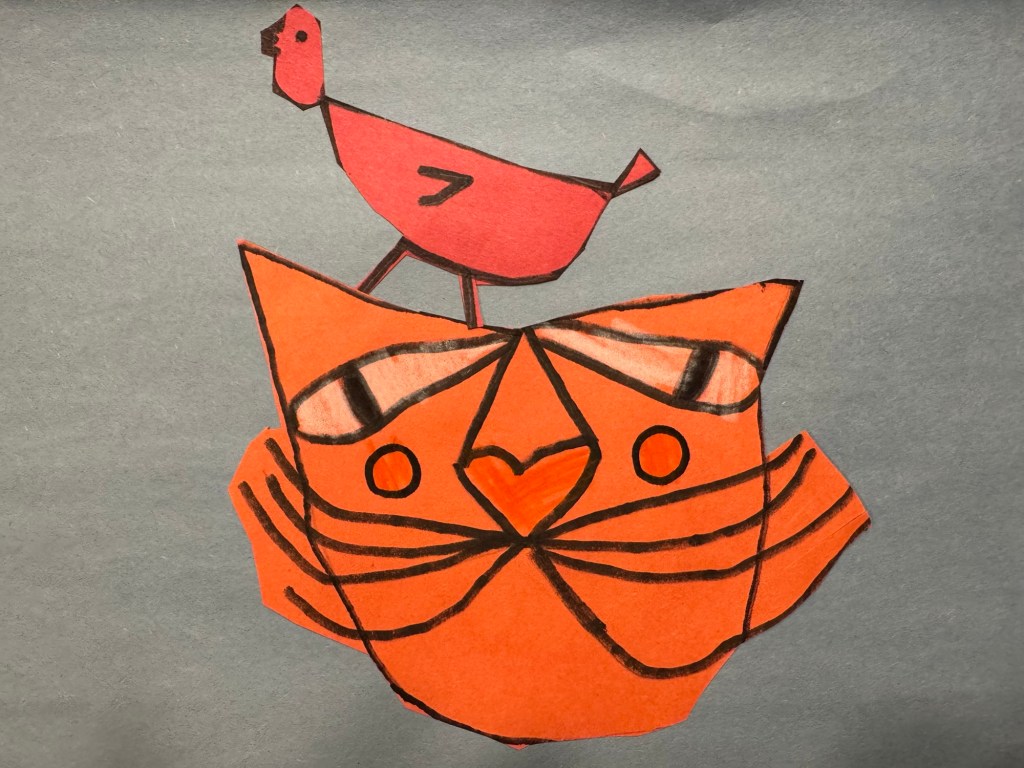
When the kids were toddlers, they were delighted to achieve my adult male height, a feat which they accomplished by standing on benches and couches and stools while proudly grinning at me. In this way they made manhood a game, but sometimes when they were thus at eye level, their gaze would drift absently, and their smiles would slacken. Their focus drawn involuntarily, they would reach out with a little hand that yearned to span the mysterious gulf of years between us, and feel the scruff on my face.
I remember doing the same thing to my dad. It was during the years we lived in Chattanooga, before my sixth birthday. Dad would be lying in bed reading the newspaper, and I’d walk up underneath the lamplight of his bedside table. There was a bowl of M&Ms on that bedside table, one whose black and tan members I’d plunder on occasion, fearing that the other colors wouldn’t taste like chocolate, but even the chocolate-colored M&Ms ceased to be an attraction when Dad was lying there at my disposal drenched in yellow lamplight and man smell. His entire body was above my head, but only just. His eyes would close halfway and glaze over as he paused his newspaper reading for a moment, and his cheeks would tighten with an abbreviated smile as he offered up his “whiskers” to my tiny paw. Like all little boys, I was afraid of my father, whose power was so awesome that he could read giant newspaper pages full of tiny words and grow thick hair out of his face, and my fear and awe made those moments of intimacy even more of a thrill.
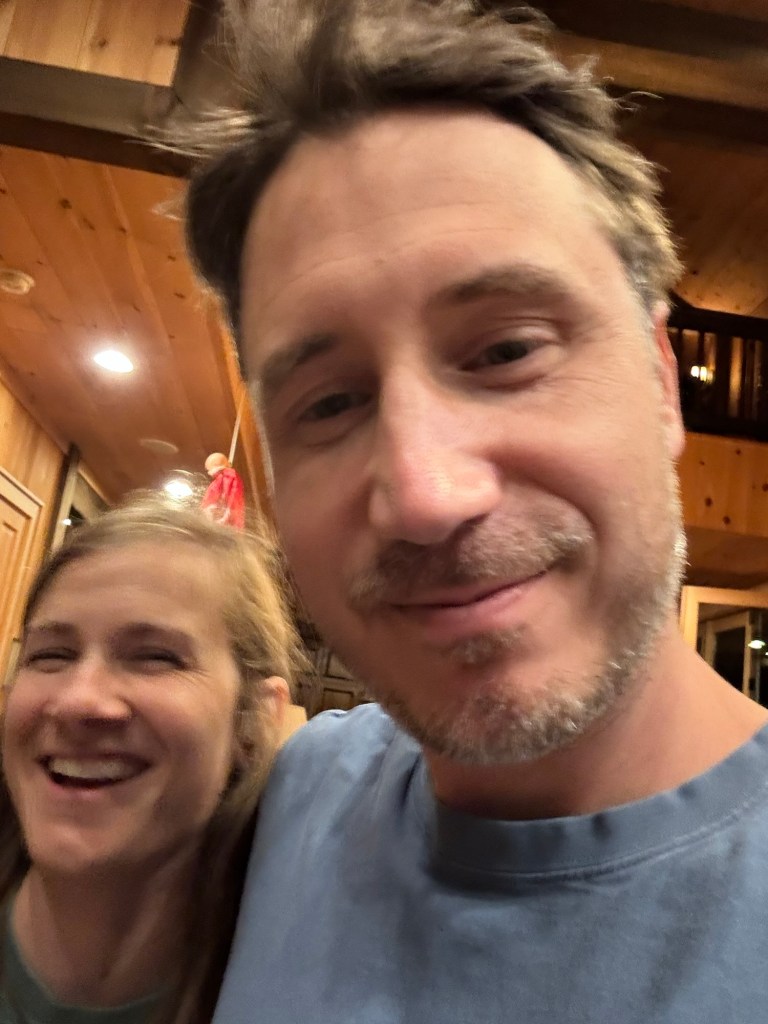
I don’t often see that absent look in the boys’ eyes anymore. As their minds have quickly sharpened to the ways of the world around them, the whiskers on my face have ceased to be as much of a marvel as they once were, and I’ve started shaving again. The swim team is holding tryouts and taking on new families, and I want to appear well groomed and responsible, to make a good first impression. For years, I’ve kept my stubble in check with clippers alone. Occasionally, out of laziness, I’ve let it go to the point that it resembles a beard, but the hair on my cheeks is a little weak, so I always cut it back. My facial hair has existed for years in an in-between state, not quite shaven, not quite grown in. I’ve always enjoyed projecting an air that I’m not overly concerned about my appearance, but now that I’m trying to cast myself as an experienced, professional coach, the in-between facial hair has to go. When my grandmother would see my father’s beard coming in, she’d say, “Oh Cartter’s growing a beard again. He must be depressed.” I don’t want people to have those kinds of thoughts when they see me on the pool deck.
As much as I admired my father as a kid, and as much as I still admire him, I always hated not having a good answer when people asked me what he did. Dad never had to do anything outside of manage his personal wealth, thus he was free to entertain wild fluctuations in the state of his facial hair, and while Dad’s lack of employment didn’t really affect the way I judged him, it did prevent me from satisfying people who wanted to size me up and form some idea of my family. Saying Dad studied newspapers and grew whiskers wasn’t an option. They wanted resume bullets, and I couldn’t provide them. Those interactions made me feel beneath my questioners, undeserving of their company, and alone. I started to feel as if I didn’t and couldn’t belong anywhere, as if striving for success would be all vanity and pretense; I’d always be just a trust fund baby. When the time came to fill out my senior page for the yearbook, under “ambition,” I wrote “none,” and in nearly twenty years since graduating college, the closest I’ve come to being able to answer the question, “What do you do?” is “I’m a swim coach.” It’s not as final as telling someone I’m a doctor or a lawyer, but for better or worse, it’s how I’ve spent most of my work life. In times of need or uncertainty, I’ve turned to swimming. It’s what I know best. It’s only natural that as I see my boys approaching a pivotal age and feel the need for them to see me succeed in something outside our family, I’m drawn yet again to the pool.
Besides scraping the hair off my face with a razor, my rededication to coaching has involved a dose of self-directed learning during the leadup to the fall season. With the kids home from school, running around the house throwing off energy and sound in all directions, I spent a chunk of the summer on the couch with reading materials, methodically studying stroke mechanics and planning drill progressions and training cycles. My behavior prompted different reactions from each of the children, whom I frustratedly shushed for weeks in an effort to complete my preseason work before we went on vacation together. Cartter was deeply offended. He told Danyelle, “I don’t like Daddy’s swimming book. He tells us to be quiet when he’s reading it, and he’s reading it all the time.” We were in the kitchen after bedtime when she told me his complaint. It was the evening that I’d finally wrapped my season plan, and I was hurt that Cartter had rebuffed my playful advances around dinner time.
“Are you mad at me?” I asked him when I said goodnight.
“Kind of,” he said.
“Can you forgive me?” I asked.
“I guess,” he said.
It was the first time his forgiveness wasn’t prompt and forthright, and it stung. Scotty found the distance between us more tolerable, and when I went into his room next door and asked if he was mad at me, he said simply, “No. Why would I be mad at you?”
After lights out I whined to Danyelle in the kitchen about Cartter’s rejection of me. I’d wanted to celebrate. I’d put on music and danced around while making dinner, trying to get a laugh out of him, but he averted his gaze and conjured up a fake laugh instead, telling me he was imagining me with no clothes on. “It was easier when they were younger, wasn’t it?” Danyelle said. “When they didn’t have these feelings and wouldn’t say hurtful shit . . . Imagine what he’s gonna say to us when he’s in high school.” I told her about my concerns, how I want to be successful in something for them, and she said, “All they want is to get to know you.”
With that advice in mind the next morning, the day before we left for a two-week vacation, I took the boys with me to get haircuts. Swim team tryouts started the day after we got back, and I figured a two-week-old haircut would give me a genuinely responsible and organized look when I met new families, not like a brand-new cut, which can make a man look like he’s trying too hard. When we got back to the house, knowing I wouldn’t be bothering with grooming my facial hair while we were away, I shaved. The next morning, we were off to Sapphire.
In the process of writing this essay, the image that keeps resurfacing in my mind is of my father on the little deck outside the old house at Sapphire, the one we call the laundry, his face covered in a salt and pepper beard, a beer in one hand and a spatula in the other, as he bends over a flaming grill and pushes a spurt of liquid through pursed lips. It was his method of taming flareups, and as a child I watched him deploy it countless times. If I think about it hard enough, I can smell it, not the smell of the charcoal and seared beef, but the smell of the woods all around, the rich decay of the mossy forest floor and the black water of the streams rolling over rocks and under fallen logs, the laundry’s old wood, and the trout gliding beneath the lakes’ surface. 1,700 pristine acres in the North Carolina mountains, two lakes stocked with trout and bass, twenty-one miles of trails traversing the valley and the three surrounding peaks, my family’s property in Sapphire is the greatest of all the spoils won from my ancestors’ good fortune in the Coca-Cola bottling business. It’s a place apart from the distractions of modern life, where the simplest pleasures are more easily savored, and it’s where in my youth I learned that besides growing whiskers and reading newspapers, my father’s manly capabilities also included tying a fisherman’s knot, cleaning a trout, and avoiding the singing kiss of twisting flames while deftly leaning in to spit on them with his beer before hopping out of harm’s way. All things that at one point seemed to me impossible.
“I like how Sapphire isn’t really in a neighborhood,” Scotty said on the eve of our trip. “And I kind of like how it’s old.”
Cartter detailed his plans to drive the golf cart around the grounds. “Slowly,” he said, “because I’m not that experienced . . . but I do know how.”
I enjoy being a hero to Cartter and Scotty in Sapphire, the one who takes them on the boat, unsnarls their lines, and gets them hooked into big fish. I play the role as naturally as I grow whiskers from my face during a visit, unperturbed by any sense of urgency to get ahead in my work life, never once thinking to shush the boys as they alternately observe my manliness and practice their own. My friend Matt flew down from Chicago to join us on this most recent trip, and the boys studied us intently as we caught, cleaned, and consumed trout from the lakes, all while we talked incessantly and with little regard for their fragile innocence.
From the time I was thirteen until I was seventeen, Matt came with my family on every trip to Sapphire. He came a few times after college when we were in our early twenties too, but when he moved to Chicago, those trips ceased. This was his first time in Sapphire in nearly twenty years. On the day of his arrival, I waited on him at the end of the driveway in the golf cart, and when he pulled up in his rental car and rolled down the window, the first thing I noticed was his facial hair. His beard was trimmed closer than normal so that the light red hair on his upper lip was more prominent. “What the fuck is going on with that mustache?” I said. “You better shave that.” Matt poopooed the suggestion and followed me down the driveway; we got to the new house that sits on the bluff above the point where Horsepasture Creek feeds into the Lower Lake, and a four-day conversation ensued.
More than once, Matt brought up his first day in Sapphire. As is my custom, I told him nothing about the place in the weeks leading up to that visit. Instead, I lied and said my family had a cabin in the mountains and that there were lakes. I didn’t mention they were private. I don’t like to build up visitors’ expectations. Rather, I enjoy seeing their astonishment when they arrive. Matt was the first person I ever surprised in this way.
People are always immediately caught off guard by the driveway. For a mile it twists through dense rhododendron that blocks the surrounding woods and creates a tunnel of secrecy. About halfway down the twisting gravel path, there is a small wooden bridge, and car passengers catch a glimpse of Horsepasture Creek to either side. Other than the gravel drive and the little wooden bridge, there are no signs of civilization, only lush, green forest and the creek’s black water, maybe twenty feet across from bank to bank. The first time he crossed the driveway bridge in the back seat of my parents’ Suburban, Matt, who grew up vacationing in Wisconsin lake country, was beginning to think Sapphire would be alright.
After the bridge, the drive winds its way to the top of a hill and emerges into a clearing. Suddenly, one is looking out over the grounds in all their manicured splendor. This is the point where people’s jaws drop, and they struggle to process what they’re seeing. I love watching newcomers reach the end of the driveway; Matt was the first such newcomer.
Matt’s favorite part of the story is the moment he took his first cast. We were standing beside the Lower Lake boathouse, where a locker houses all the fishing supplies. Matt had recovered from the initial shock and realized that he had indeed entered a fisherman’s paradise. The way he tells it, his only concern was that my father might present an obstacle to his enjoyment. Matt and my father had barely met, and Matt expected that Dad would be all over us, thereby limiting his ability to dictate his own fishing schedule, and, just as importantly, talk. At the same time, he sensed, probably correctly, that Dad was worried my friend was going to be an extra babysitting charge. Matt put all those concerns to rest with one cast. While my father looked on and delivered a kind of lecture about how to fish the lakes, Matt, standing next to the boathouse, caught, unhooked, and released a trout. Then, he showed my dad that he knew how to operate the eight-horsepower gas motor mounted on the backs of the canoes. That was enough for Dad, and for the next five years, I did all my fishing in Sapphire exclusively with Matt, sans adult interference. On the lakes in Sapphire, Matt and I fished, motored, paddled, and laughed our way through early adolescence. We started as baby-faced thirteen-year-olds thrilled by our independence and our budding competence. By the end of those boyhood years, both of us were shaving.
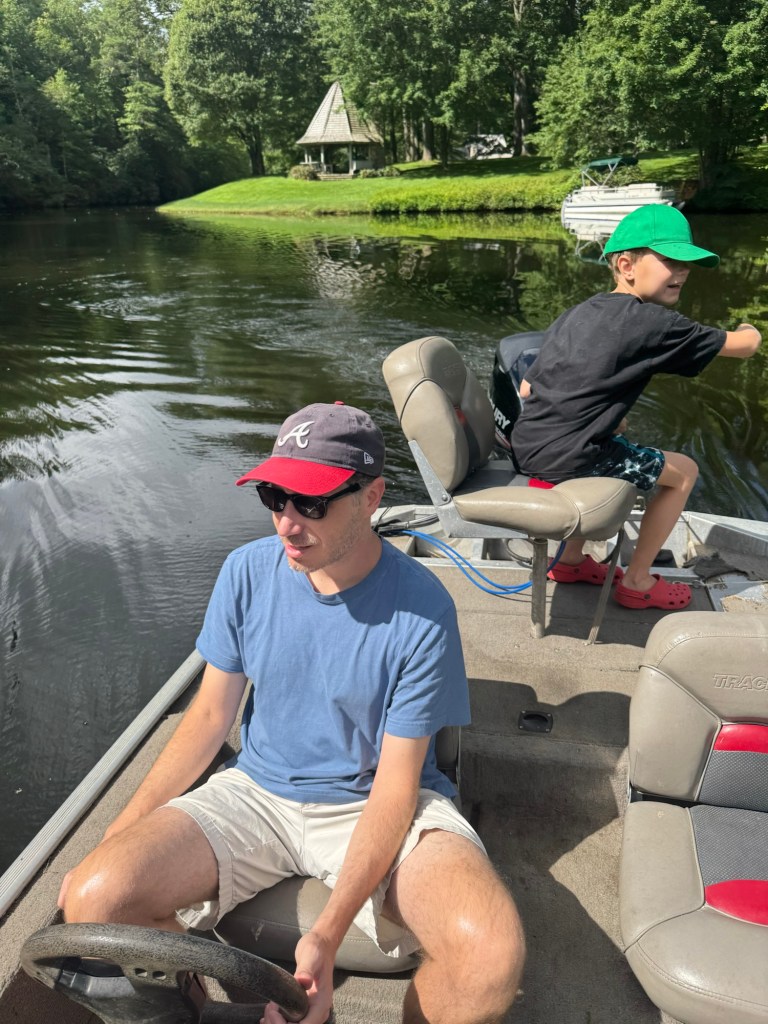
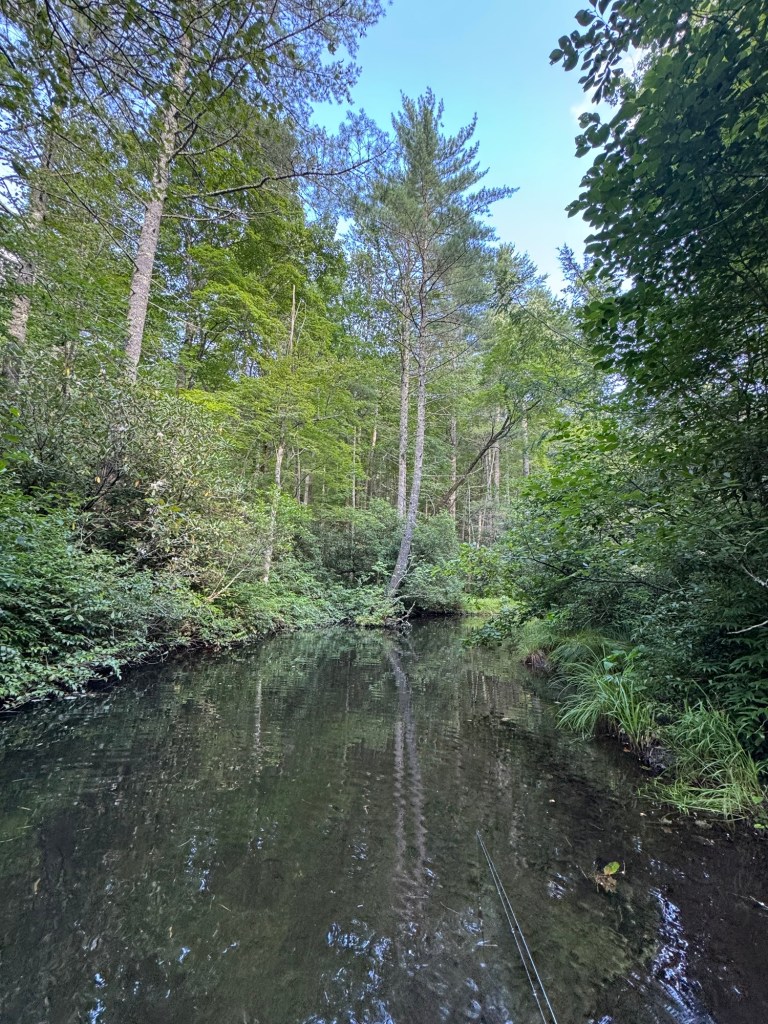
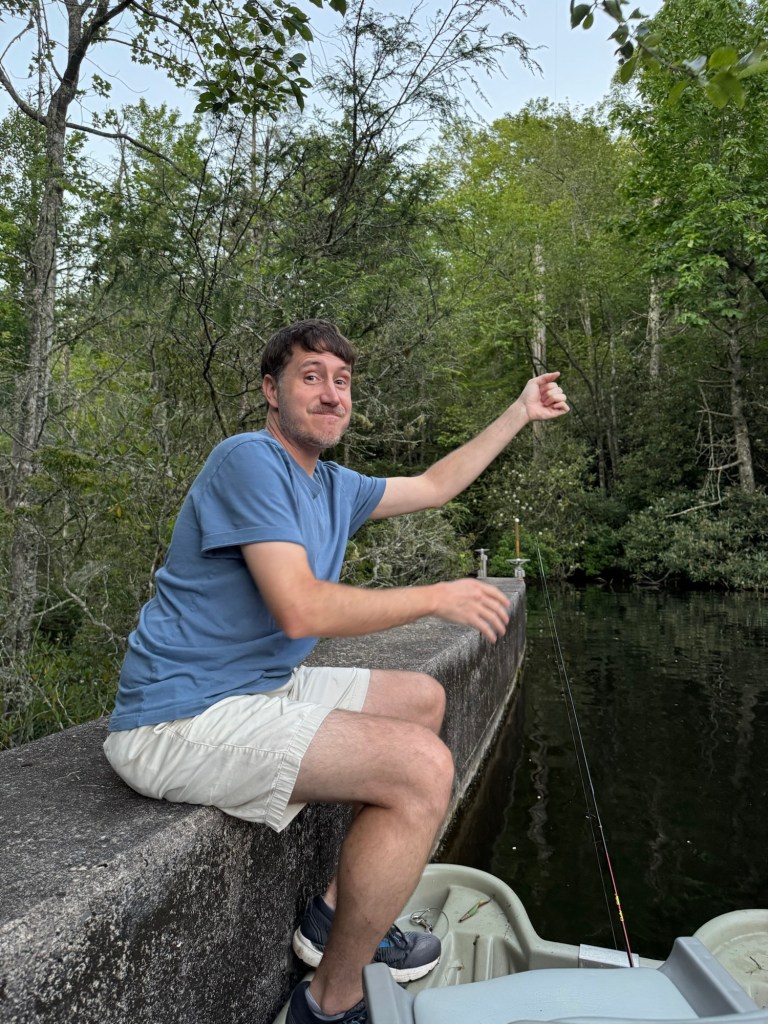
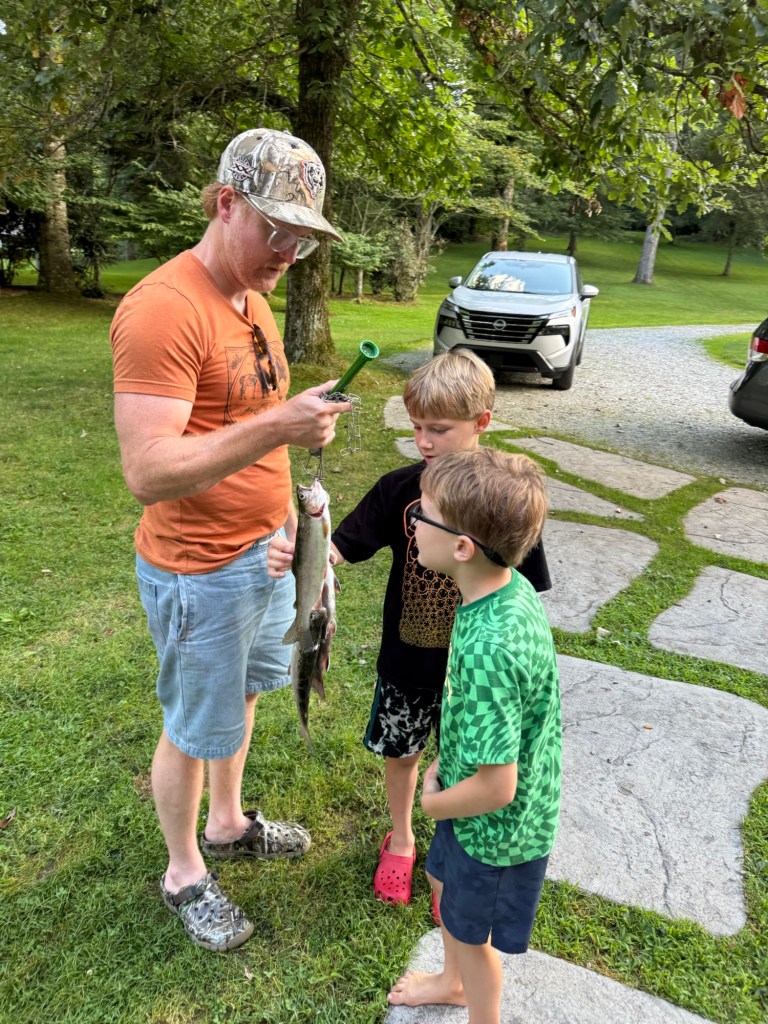
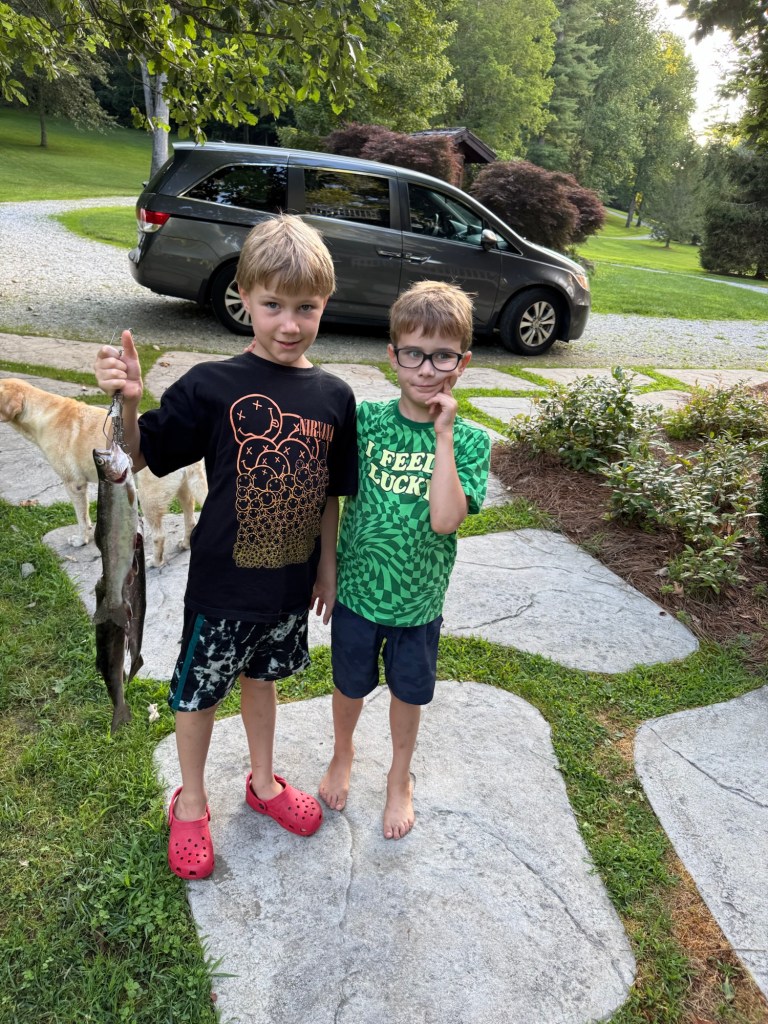
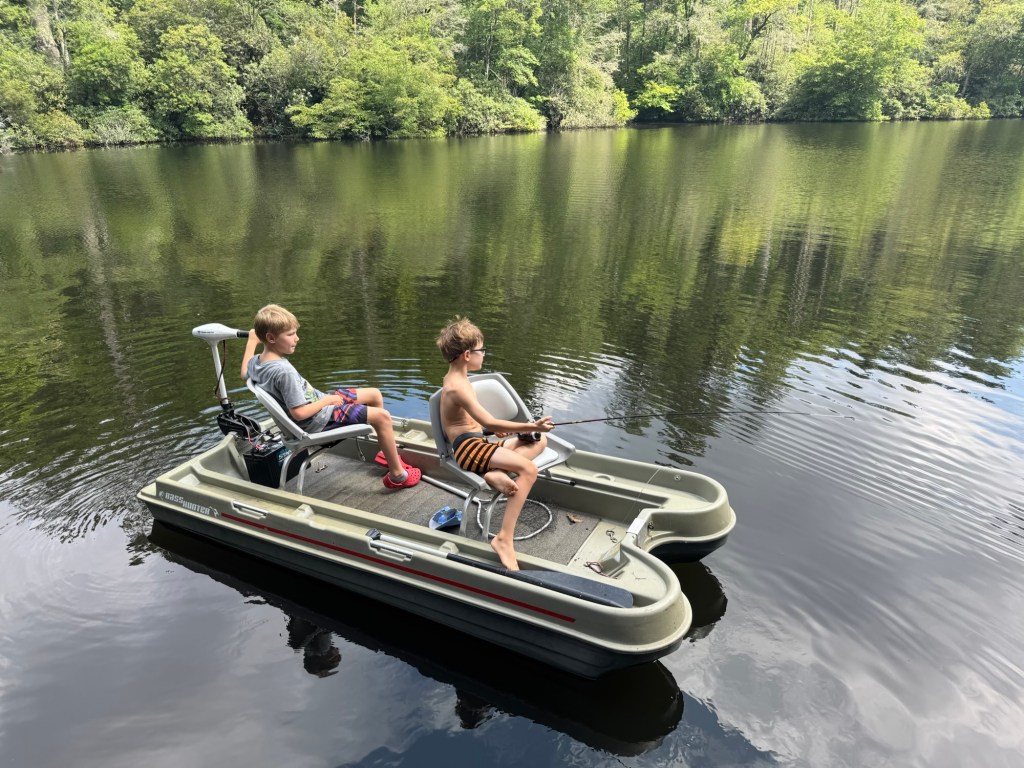
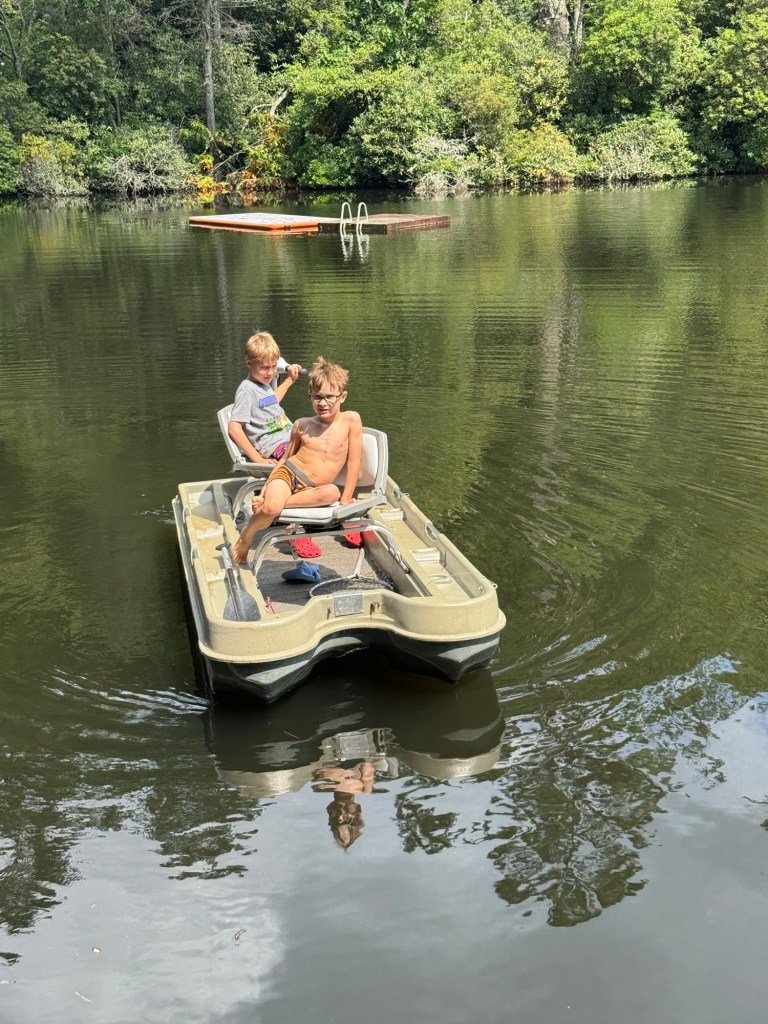
Not even twenty years can erase the patterns Matt and I developed as kids in Sapphire. We fell right back into them, and Cartter and Scotty watched, shadowing us more closely as the days wore on. As was always the case in the past, Matt directed most of our fishing. He manned the trolling motor on the little plastic two-seater on the Upper Lake, and we fished the holes along the banks. When the water got too skinny, he raised the motor and paddled us into the headwaters, where fishermen are swallowed up in the forest’s undergrowth and disappear from view of the boathouse. After the first such trip, we returned with a stringer of three fish (all Matt’s), and Cartter and Scotty took pictures with them and hovered over Matt while he cleaned them, helping him sling the heads and guts into the lake. Then, the boys sat silently at the dinner table across from Matt and me while we picked the meat off the bones with our fingers and ate it, Scotty occasionally asking for a bite, Matt and I never stopping our conversation about the differences in rainbow and brook trout flesh. From that point on, they followed us to the Upper Lake when we went fishing, and when Matt and I returned from our journeys into the headwaters, there they’d be waiting at the boathouse, Cartter ceaselessly casting a Little Cleo spoon, and Scotty sitting with his knees pulled up in front of him, the reels he had reduced to rat’s nests lying haphazardly on the deck beside him.
I worried beforehand that Matt might be too much of a distraction, that I’d lose sight of the boys and miss spending time with them, fueling their resentment in the process, but hanging out with Matt turned out not to be like burying my nose in a swimming text. It didn’t deprive the boys of any freedom; there was no need to shush them; and even when Matt and I were ditching them at the boathouse to fish the headwaters, the boys seemed to somehow feel included. This they evidenced by their resolute patience in awaiting our return, and in their persistent efforts at stifling their needier impulses in favor of a burgeoning wee manhood of their own. Cartter started tying his own knots and unhooking his own fish on this trip; Scotty leveled up from the punch and throw to the spinning reel; and when Matt and I docked up, the two of them even took out the little two-seater by themselves, at first to retrieve a lure snagged on a submerged log, and then to make long casts out in the middle of the lake. Cartter worked the trolling motor, much to his delight, and when he snagged in the trees, he navigated into and out of the brush before cutting his line with the pliers. He was very proud of his independent fishing, and the way he talked about his lure selection and his methods reminded me not a little of Matt when he was a kid. Even better, the adoring smile that was lost to me in the days and weeks leading up to our vacation reappeared on his face with frequency and intensity.
“He loves me so much!” I said to Danyelle one night after bedtime.
She smirked happily and mischievously at me. “Must be a lot of pressure,” she said.
Of course, she was right. When I think about that way Cartter looks at me, almost like he’s being let in on an inside joke, the way he answers, “Me too,” when I tell him I love him, I feel pressure not to let him down, even as I fear that letting him down is inevitable. One day soon, catching a trout and letting him in on my shenanigans with Matt won’t be enough. He’ll cease to be impressed. As the miraculousness of my whiskers has already begun to fade, so too will Cartter’s awe at my other adult capabilities, things like ordering at a restaurant and driving a car. Even being the boss on the pool deck will likely lose its luster. After all, I’m just an age group coach. One day when Cartter is an older adolescent, instead of a god, wise and omnipotent, all that will remain of me to face his judgment will be a man, flawed, and in some ways, weak.
Danyelle thinks I worry too much. “Is that the way you feel about your dad?” she asks. She means it as a rhetorical question, knowing that besides her, Dad is my closest confidant. He was the best man at our wedding; we named our firstborn after him; I talk to him for hours at a time. Whatever harsh judgments I might make about Dad’s life choices, I forgive him, and Danyelle understands that. Still, those same choices are a lot harder to forgive when I see myself making them, and I see myself making them plenty. I wonder if my boys will be as forgiving of me as I am of my father, and, more importantly, if they’ll avoid assuming my sins as their own.
The day after we came home from Sapphire, I still hadn’t shaved, and my stubble was grown in to the point that its bristliness was becoming softer. No doubt my grandmother would have suspected a creeping depression. Cartter seems to have inherited some of her suspicion. When I leaned into his bed to cuddle him goodnight, tickling and scratching his soft cheeks with my two-week old scruff, he squirmed free of me in the dark and asked “Daddy? Why are you growing a beard?”
“I don’t know,” I said. “Do you want me to?”
“No,” he said.
“Well, I’m not,” I told him. “I’m shaving tomorrow,” and then leaning in again, “Do you wanna touch my whiskers?”
“Why do you call them whiskers?”
The question stood me up anew. Cartter did not want to touch my whiskers, or so he seemed to be saying. Not only that, but he wasn’t so sure he wanted to call them whiskers at all. Part of me wanted to tease and keep up the act, to insist that I call the stubble growing from my face whiskers because that’s what it’s properly called, but it was bedtime, and Cartter was in an earnest mood. So, I told him the simple truth. I learned to call them whiskers the same way I learned how to tie a fishing knot, the same way I learned to clean a trout, the same way I learned to drive a car and to spit beer at grill flareups: “That’s what my dad called them,” I said.



Other Events, Manly and Unmanly
Scotty’s manly adventures included several large hurts, both of his feelings and his body, which he endured without tears, barely. He banged his hand full force on a deck railing while throwing paper airplanes with Matt, who reported that it was plain Scotty wanted to cry, yet he didn’t. Danyelle’s sister Gabrielle brought a super Nintendo to Sapphire along with several games, including Mortal Kombat. Unsurprisingly, Scotty suffered the most defeats. When I saw him nearing his wits’ end playing with his brother while Matt and I looked on, I decided to step in. Only, I was preoccupied with preparing for an upcoming battle against Matt, so I seized the opportunity to practice Sub Zero’s crushing freeze ball move. I thought Scotty’s character had enough juice to sustain another hit once frozen at the end of the tiebreaker round, so I approached and tapped him as a joke. That unfortunately turned out to be the death blow, and Scotty’s face squished into a panic, so difficult was it for him to reabsorb his tears. He managed to do it, though. Finally, during the first half of the trip, my friend Dan and his family were there, and the boys spent their time playing with Dan’s son Hiller. Much of that time was spent pushing each other on the swing hung from a high oak branch in the lawn outside the big house near Horsepasture. Scotty was the easiest to push; he enjoyed the swing more than anyone else; and his turns lasted nearly twice as long as Hiller’s or Cartter’s. The boys liked to interrupt each other’s swings, redirecting them into unpredictable circles. One time while I was watching, Scotty was so turned around and ended up swinging thirty feet through the air and crashing into the tree’s massive trunk with a thud. I said, “Oh, shit!” and hopped up from my seat on the grass ready to rush in for the assist, but Scotty shook it off, smiled, and carried on as if nothing happened.
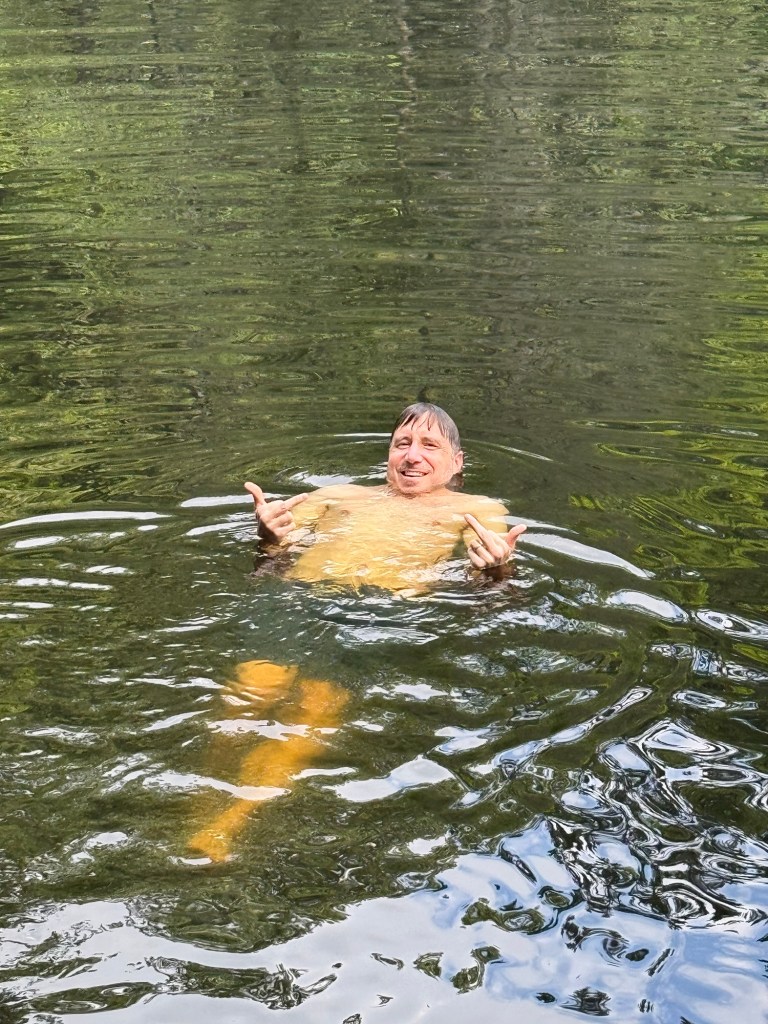
Scotty also proved himself on the trails and in the lake. On a hike up Sassafrass, he zoomed ahead of everyone and reached the summit minutes before anyone else. He was always the most eager to take a dip too. Once, after I swapped him out for Cartter in the little plastic boat on the Upper Lake, he stripped down and swam to the swim dock and back on his own. A light rain was beginning to fall, and it was a short, cold swim. Another time, he ran to the main house to relieve his bowels while Cartter and I were swimming, and then suddenly reappeared running down the path past the dam, ripping his clothes off and streaking to the edge of the dock before plunging in. He’s apparently a big fan of skinny dipping. He got the idea when we were walking to the boathouse one day and Danyelle offered, “Do you guys wanna change into your suits or go in your undies?”
Scotty’s face lit up, and he turned to look at his brother and said, “Undies?”
Then, I said, “You guys could just go skinny dipping.”
The cold was not a deterrent. He’d plead with his brother to get in with him when Cartter preferred to stay dry and warm. At one point I joined him for a swim on an overcast day. Everyone else was getting out, and once I jumped in, Scotty wanted to stay in with me. “I wanna stay in with you, buddy,” I told him, “But you’re starting to turn blue. You better get out.”
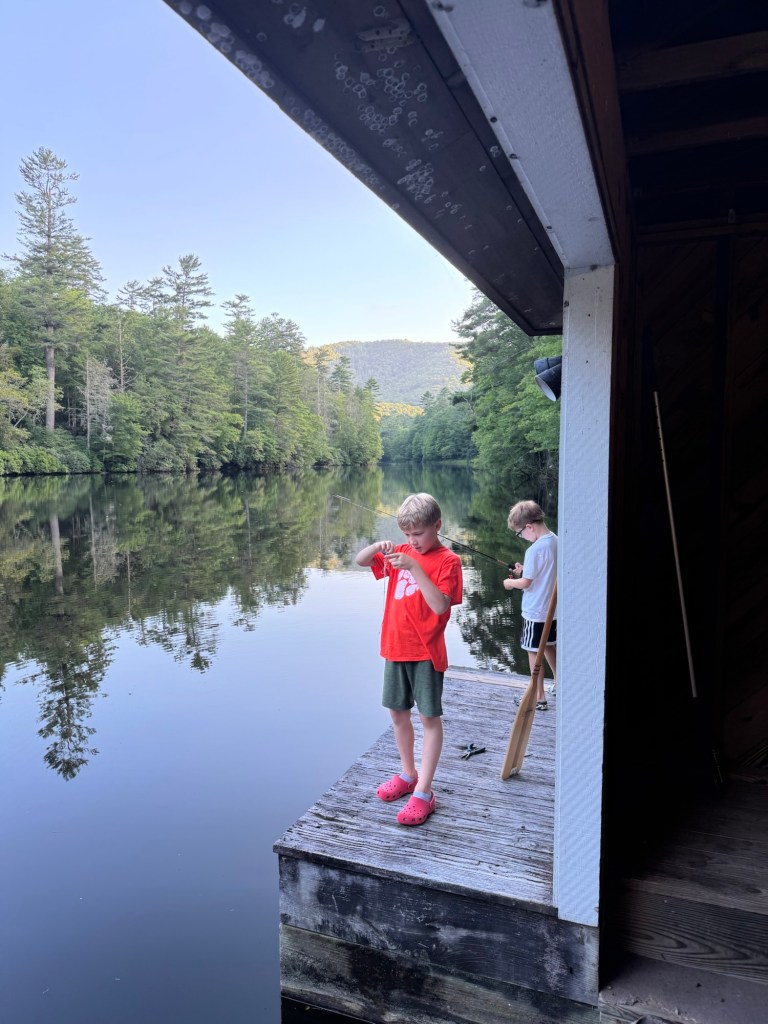
Cartter hiked and swam with his brother, but like my friend Matt, it’s all about the fishing for him. Floating in the middle of the lake near the little gravel landing, Scotty and I reeled in a couple of big rainbows within about a five-minute span while Cartter was standing on the boathouse. Cartter hollered at us urgently from his perch, eager to get in on the action.
“Can you understand what he’s saying?” I asked Scotty.
“No,” he said calmly. “I can hear his little two-year-old voice.”
I’d been thinking the exact same thing. Floating there on the little plastic boat, Cartter’s voice coming across the water and bouncing off the trees sounded a lot like the little boy in all his toddler videos. Just as I was agreeing with Scotty, Cartter hollered again, this time making sure to be understood. “Come here!” he said, wanting to be picked up and to try some casts from the boat.
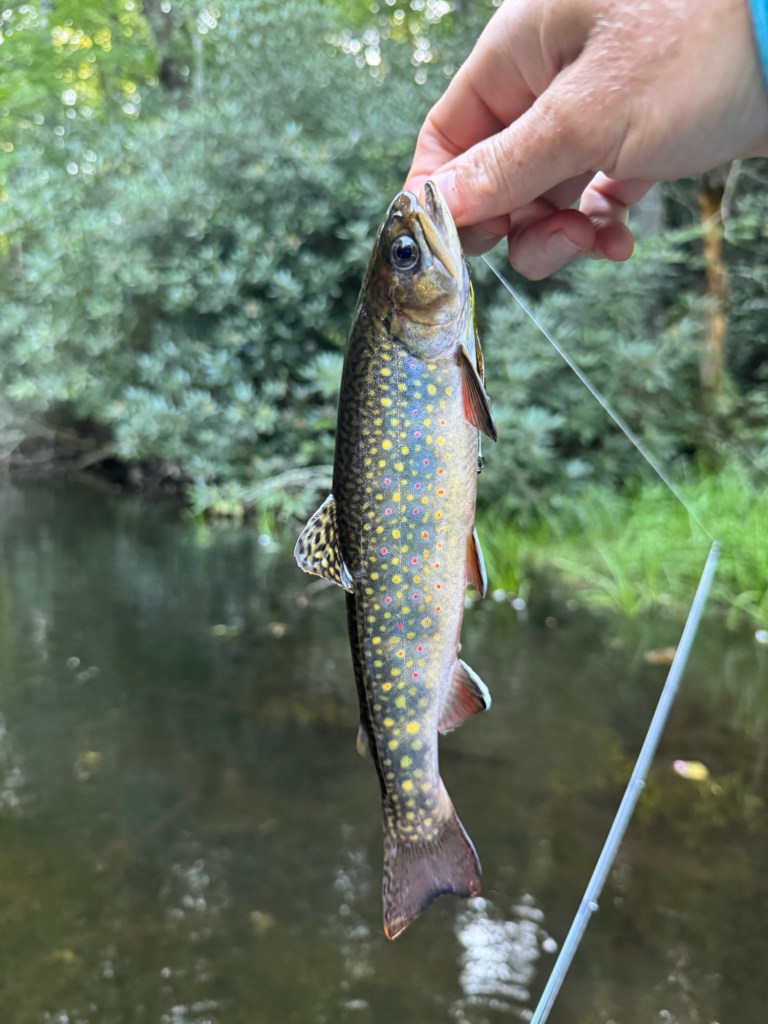
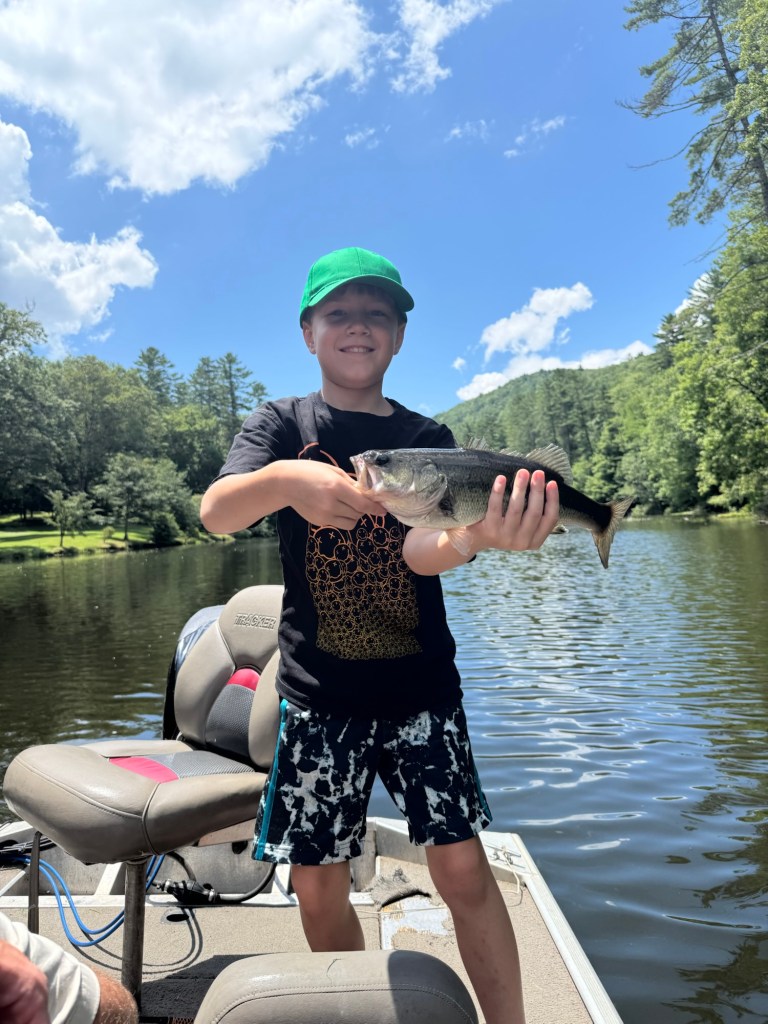
Cartter wasted as little time not fishing on this trip as possible. When we were around the house, he threw plastic shads off the point and caught bass after bass, announcing each catch as he dragged them to shore and pulled the jig hook out of their big bucket mouths. In the end he was rewarded for his persistence with his very own fishing story. After Danyelle and I left him and his brother on the boathouse while we walked one of the trails, he greeted me with the near hysterical telling of it. “Daddy!” he cried running toward me as I drove up near the main house in the golf cart. “I caught a big fish! It was bigger than my biggest fish ever!”
He’d been very keen to use a three-quarter-ounce spoon that looked like it belonged at the end of a deep sea rig, and while I was away and therefore unable to discourage him, that’s exactly what he did. Fishing from the boathouse with giant spoon, he hooked into a big trout, which upon being landed, flopped around the boathouse decking, jumped back into the water, and broke his line. I confirmed the story with Scotty, who said that he had been fishing the other side of the dock; while he was racing around the boathouse to deliver a pair of pliers, the fish escaped. How big the monster was, we’ll never know.
Besides fishing, Cartter’s other point of focus was driving, both the little plastic boat and the golf cart. He only drove while I accompanied him, and true to his word, he went slowly.
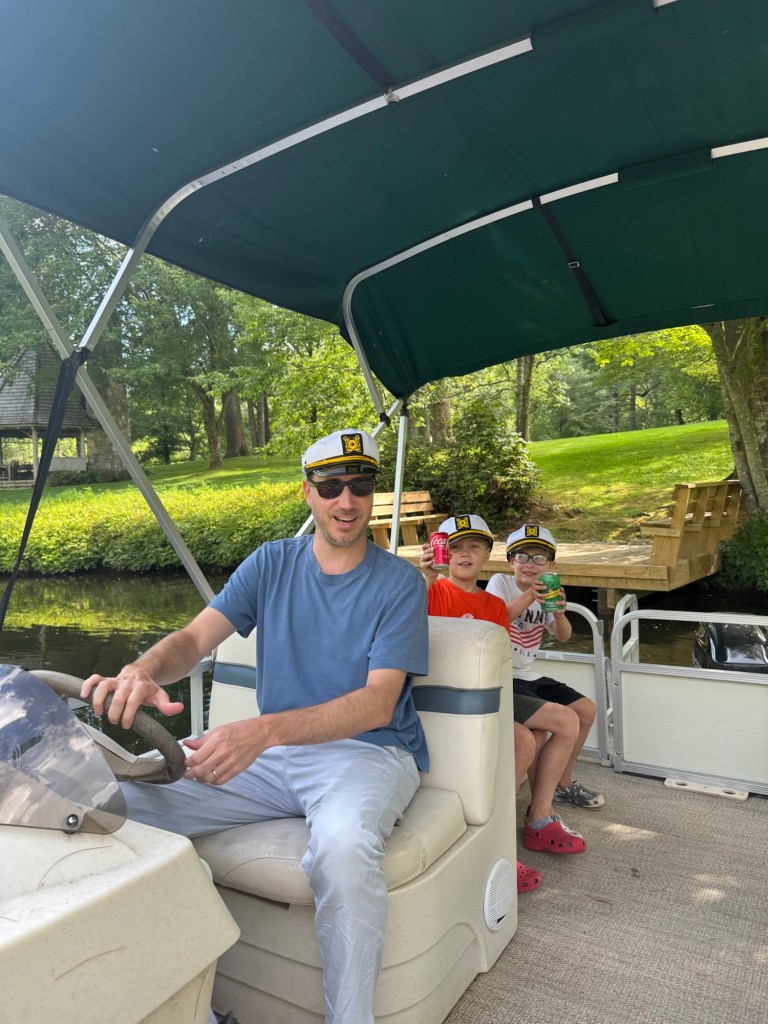
The boys were big fans of the canoes on the Upper Lake. Pointed on both ends, they do not have motors. I’ve avoided them the last several years due to back and shoulder problems, but recently I’ve regained some of my lost health, and when the trolling motor was dead on the little plastic boat, I took the boys out on a canoe, one at a time. Gliding along silently, cutting through the water’s surface with the slightest of ripples, each child separately asked me which was faster, the canoe or the motorboat; each wanted to know who invented canoes; and Cartter was prompted to ask who invented fishing. Scotty was particularly fond of the canoe and got his mother to take him out again later. I can see him, a little figure riding low above the rim of the boat in his bold red T-shirt with USA in white letters across the front, sitting still and listening.


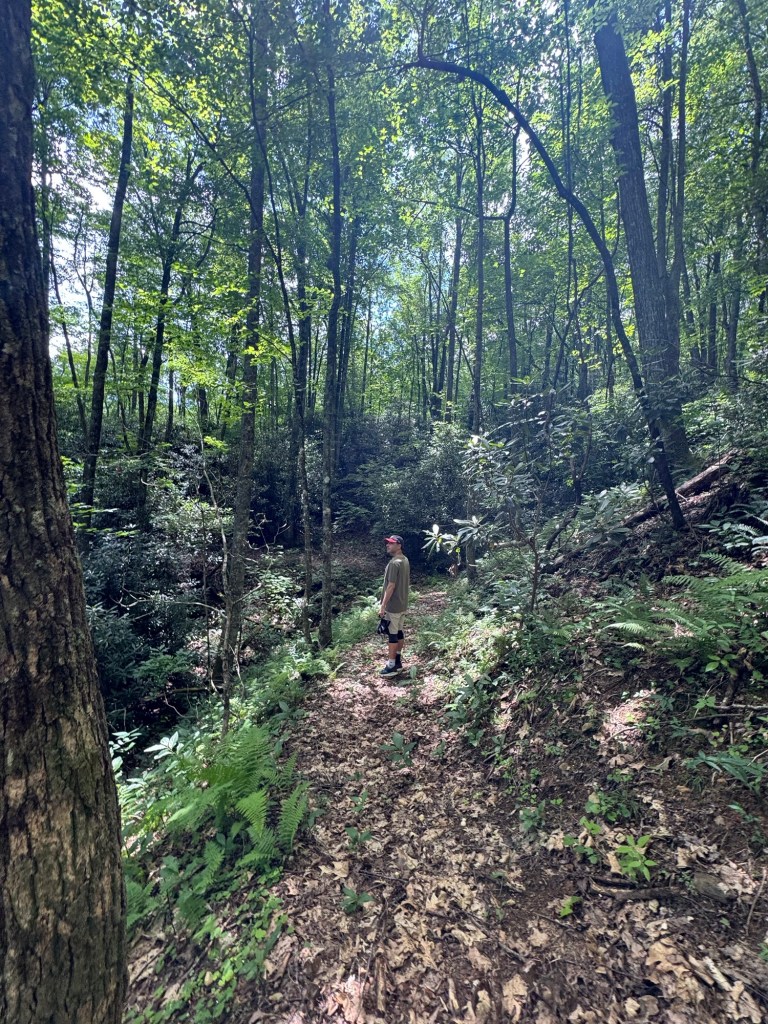

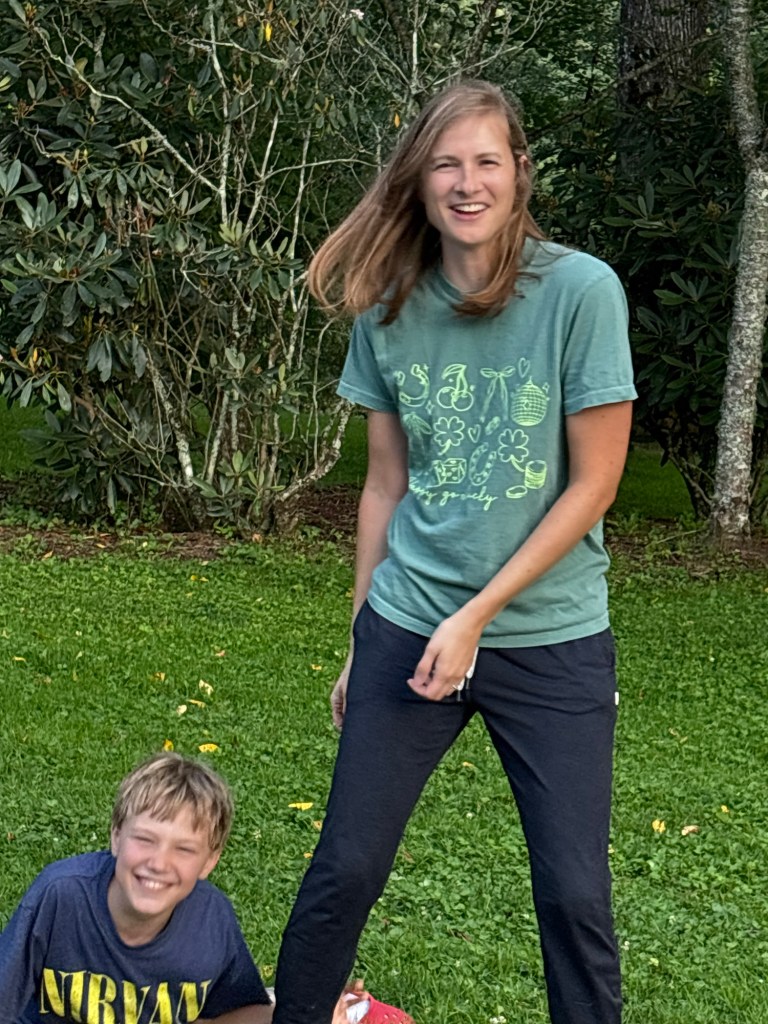
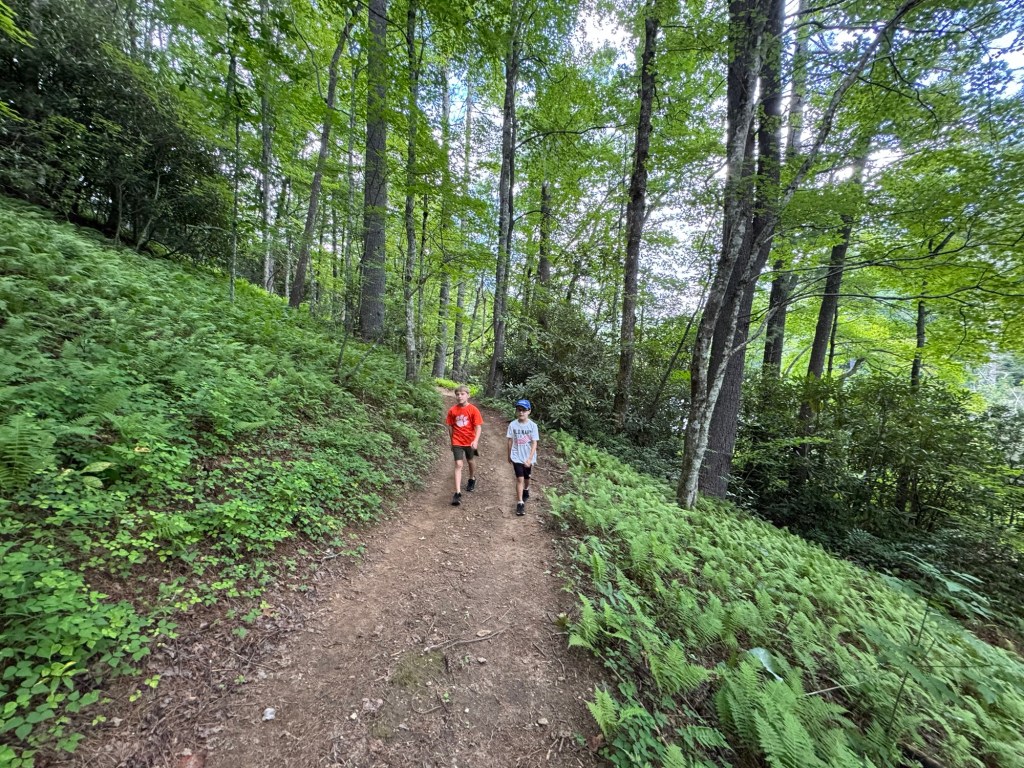
Nothing beats doritos with a pb&j on the top of Sassafrass. We snuck around the side of the heavy brush that houses bees’ nests and separates the overlook into two sections when we spotted large, hostile-looking red ants in the lower portion. I probably won’t be doing that again, as certain death is one rolled ankle away. After we enjoyed our lunch on the rocky razorback beyond death’s pass, Cartter and Scotty started down, and I overheard Scotty ask his brother, “What do you like about me?”
Cartter answered immediately, “Everything.”
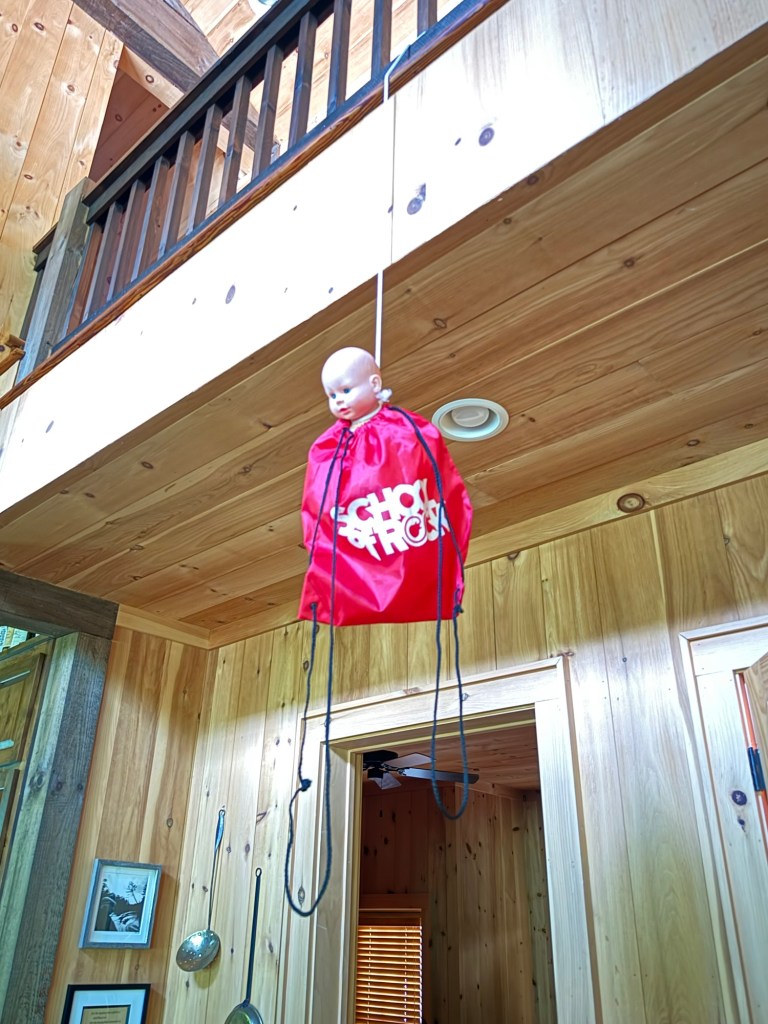
They have a terrible habit of leaving their rods lying on the floor in doorways, but they didn’t play with toys at all on this trip, although they did find a baby doll, place it in a scrunchy bag so that only its head was showing, and hang it with a string from the second-story banister. The baby remained there hanging above the dining room for most of our visit. Despite this strange bit of decorating and the aforementioned sloppiness with the fishing poles, their messes were minimal. Even more amazing, they didn’t fight the entire time.
We started reading White Fang in the days leading up to Sapphire, and once the first wave of visitors departed, we resumed. At first, the boys were confused by the apparent lack of a main character. Scotty commented early on that, “I feel like this book’s just about things getting eaten.” Both he and Cartter have been very still and attentive throughout our readings.
Not everyone was up to the task of practicing their manhood in Sapphire. Scotty said of his friend Hiller that, “all he wants to do is his stupid men classes,” which consisted of the boy leading Cartter and him through calisthenics and stretches. Ironic that Hiller, who is so enamored with the idea of manhood, struggled so much with being a baby. He peacocked around the porch while the boys proclaimed I was no match for him in ping pong, but after I thrashed him 21-6, all he could say was, “I wasn’t trying,” and, “My dad’s better than you.” After a hike up Nix that came back down the far side of the mountain and looped through the valley, a hike that Hiller initially tried to quit, he underestimated the urgency of a bowel movement. Rather than making it to a toilet or pooping in the woods, he let go a large turd in the Upper Lake where all of us were swimming. He then fearfully kicked at it, disintegrating it into pieces before swimming away. After these and a few other less-than-manly displays, I have to admit that I enjoyed it when, before finally departing, Hiller wept like a baby because he was denied the final ice cream cone. Dan had deferred to Hiller’s younger sister’s judgment, who claimed she would be upset by the unfairness of her brother receiving the lone remaining cone. Hiller instantly burst into tears, wailed that he hated his sister, and fled the scene. I immediately got to work devising wicked schemes to divide the cone amongst the rest of us and ostentatiously enjoy it upon his return. Luckily these schemes did not make it past the planning phase.
A highlight during the first half of the trip, which included different combinations of six kids, nine adults, and seven dogs was a game of Kub, in which Matt Vassallo and I faced off against our wives. After dispatching with Dominic and his girlfriend, Danyelle and Liz, who had been sitting at the base of the hill beneath the driveway watching with all the children, joined in. Matt and I doled out some of our sticks to the boys, who met with little success and made the game much closer than it would have otherwise been. Forced to try to capitalize on our fewer remaining tosses, we spurred the boys to chants of “Men, Men, Men, Men!” By immersing myself in the rhythm of the chant, letting it wash over me as I bounced slightly to its cadence and readied myself, I found that I was remarkably more accurate in my throws and knocked over the blocks at a much higher clip. Once Matt Vassallo and I discovered this amazing ability, we ended up winning in a landslide.
It has to be mentioned that Matt Vassallo’s dog Oreo is the most annoying dog I’ve spent time with at Sapphire. She barked loudly and snapped at the golf cart’s front tire any time it moved. She also followed Sammy around and barked in her face a lot. Cartter ended up with some marks on the back of his neck, which either came from Oreo’s claws or her teeth; we’re not sure.
Gabrielle’s dog Cristopher, aka Critafur, aka Critachoo, aka Choo, aka Butt Crumb, wore a diaper vest while in the house but persisted in lifting his leg to mark his territory.
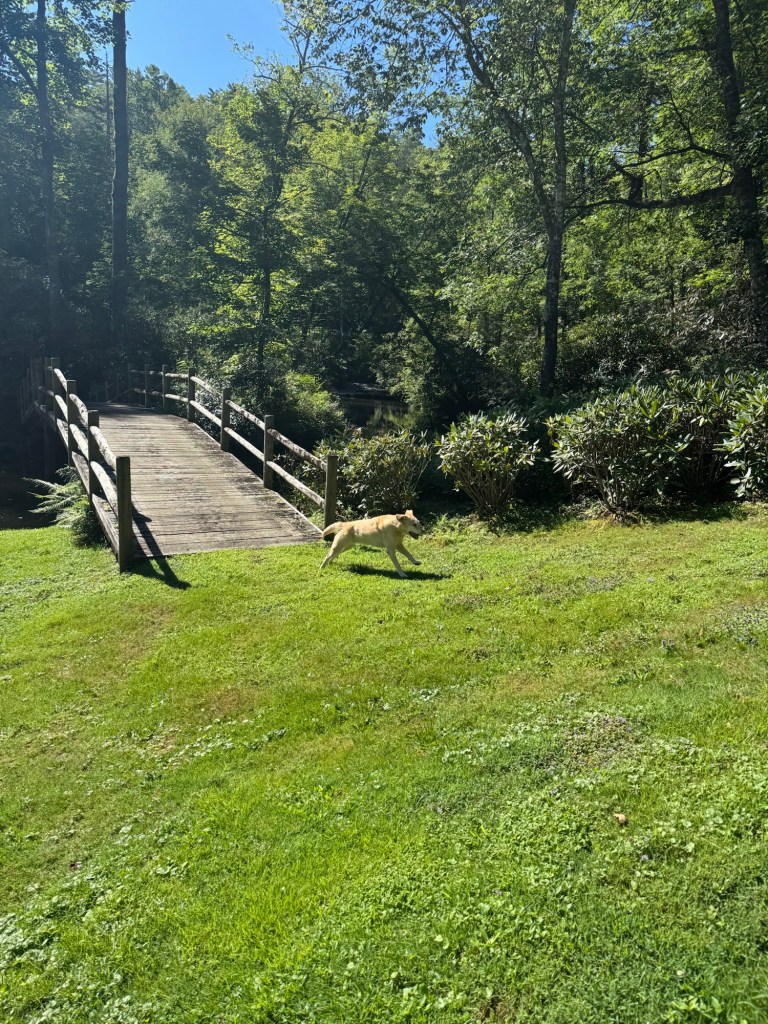
Sammy showed her age throughout the visit, visibly limping after running, jumping, and swimming forays. She howled frantically when left behind in the house while we hiked the trails, and she whined from the boathouse before circling over to the dam and gingerly flopping into the water when we swam. On the drive up, she received something of a beating from me after vaulting two rows in the van and claiming shotgun. This bit of musical chairs happened after Danyelle had moved into the back row to calm her, and after she had broken the restraint we had fastened to the seat belt to avoid such a situation. On the way back, we fastened a gate to the seatbacks in the middle row, which kept her confined. She protested this betrayal by lying down on the ground and refusing to move when we let her out to relieve herself at the gas station.
 The Raging Elitist