“And every evening, when Frith has done his day’s work and lies calm and easy in the red sky, El-ahrairah and his children and his children’s children come out of their holes and feed and play in his sight, for they are his friends and he has promised them that they can never be destroyed.”
– Dandelion in Richard Adams’ Watership Down
The last day before autumn, and I brought a fishing pole and a net out to the beach with the boys, thinking we’d spend our Sunday morning casting for bait in the tidal pool and then fishing for reds out past the breakers. The best times in life are almost never what we intended.
I should have known. How many times as a child had I dragged a sea kayak down the beach access or hauled fishing equipment out to the sandbar with my sister, only to leave it lying on the beach while we swam in the waves and bodysurfed into shore? On this day, it was almost unseasonably hot, and a king tide was on its way to cresting. After Cartter caught three finger mullet in his little net, I hooked one to the end of a line with a heavy sinker, walked out toward the breakers and threw it as far as I could. Soaked up to my chest, I handed the pole to Cartter and stood next to him, looking out at the midmorning sun glistening off the top of the glassy ocean surface, tall broad waves rolling in one after another. No rip currents or chop. If I looked out my window and saw such a break on a Sunday morning when I was a child, my sister and I would hurry to get our suits on and rush out to the beach to revel in bodysurfing paradise.
Now, I looked at Cartter, who, pole in hand, was staring out to where the waves were crashing in. His little brother Scotty, who comes up to about the bottom of my ribcage now, was off to my right and said, “I wanna go out there.”
“What about you, Cartter?” I asked. “You wanna keep fishing, or you wanna go for a swim.”
“I wanna go out there.”
And so we dumped the bait bucket, stuffed the net inside it and laid the fishing pole down in the sand. I set my braves baseball cap upside-down, wadded up my wet shirt, and rested my sunglasses on top. A neat little pile of stuff to wait for us while we bathed in the sea. I always felt a sort of superiority to the people who drag great piles of things with them out to the beach, wagons and coolers, chairs and tents. For most of my life, my idea of a beach trip has consisted of two activities: swimming, and taking a break from swimming. When you’re done with these, you go in. My sister and I always went out early before the yokels showed up and pocked the beach with all their stuff. As we walked back down the beach access, hands free, heading for an outdoor shower and cartoons in the living room, here they’d come plodding like pack animals dragging all their gear. None of them bodysurfed. They sat in chairs, and their pathetic children splashed in the tidal pool and played in the sand. What was the point? I wondered. One time Betsey and I made a little sand sculpture of a dick and balls and floated it out into the tidal pool, laughing hysterically as two younger kids noticed it and did a double take. This act sums up how we viewed the beachgoing habits of our home island’s many visitors.

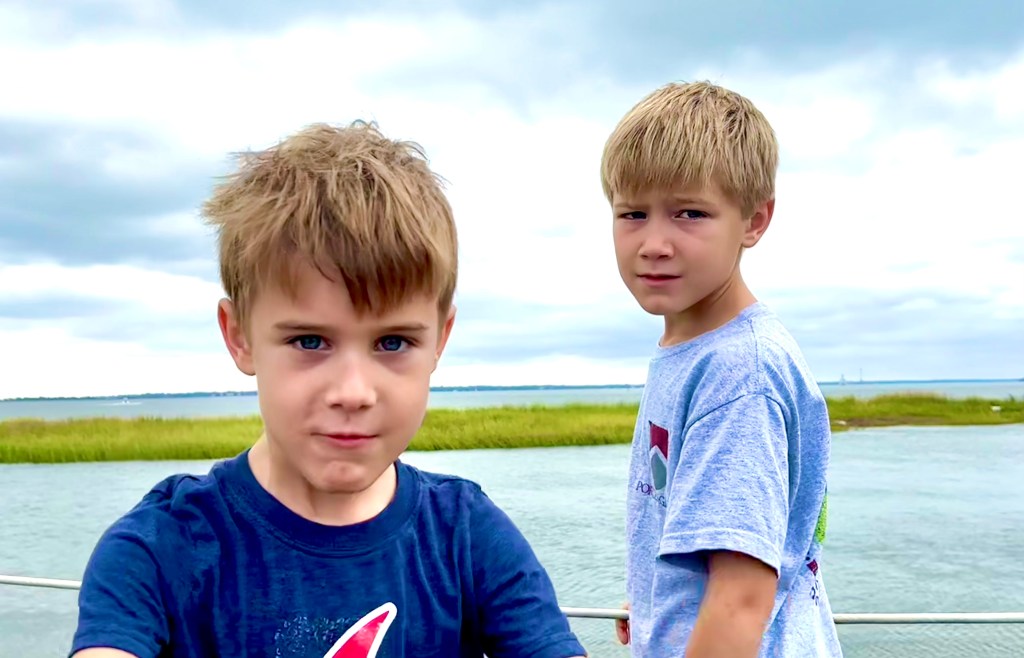
Now, I’m a visitor myself, and over the course of the summer, Danyelle and I have discovered the usefulness of a couple of chairs when we take the kids out to the beach. It’s a discovery that brings me no joy. It feels like waving the white flag in surrender to a creeping physical and spiritual decrepitness. I was glad, wading out in my gym shorts with Cartter and Scotty on either side of me, that there was no chair waiting to be sat in and then carried back down the beach access when we were through.
When the water level rose above my waist, the usual nerves started kicking in. Even after thirty-four years of swimming in this very spot, a veritable infinitude of competitive swim training, and an open water national championship, I’m still nervous at the start of every ocean swim, even more so when I have my young children in tow. On this occasion Cartter was preoccupied with the idea of jellyfish. Before venturing out into the deeper water, he asked, “Is it jellyfish season?”
“I don’t know,” I answered.
“It’s supposed to be in September.”
“Well, it’s September, so maybe.”
“I think I don’t wanna go out,” he said, starting to back away.
“Just don’t worry about it,” I told him. “We probably won’t get stung.”
“Does it hurt?”
“Yes, it hurts a lot.”
“Is it like a bee sting?”
“Yeah, it’s like a bee sting,” I said.
“Oh, well I had one of those, and it wasn’t so bad.” He was starting to step toward the deeper water now, and I thought of the time I stood in the breakers with my friend Matt Gruca and watched a jellyfish open itself up in the face of a wave before wrapping around my leg. I was in my early twenties, and the searing pain I felt caused me to drop my rod and run screaming back to the beach. The worst part of a jellyfish sting is that it feels like it will never stop. In that moment I imagined how Cartter would take it and didn’t want to mislead him.
“The difference between a bee sting and a jellyfish is that the bee just stings you in one spot. A jellyfish has tentacles that it can wrap around you. It really hurts.” That, of course, stopped him in his tracks. The water kept on getting deeper, and Cartter was more than a little uncertain. It was starting to look like we wouldn’t make it out to the waves, and then, unexpectedly, I stepped up onto a bar I hadn’t realized was there. Suddenly, I was in shin-deep water, and I turned to the boys and yelled, “Look! I’m on a sandbar! Look! It’s shallow!”
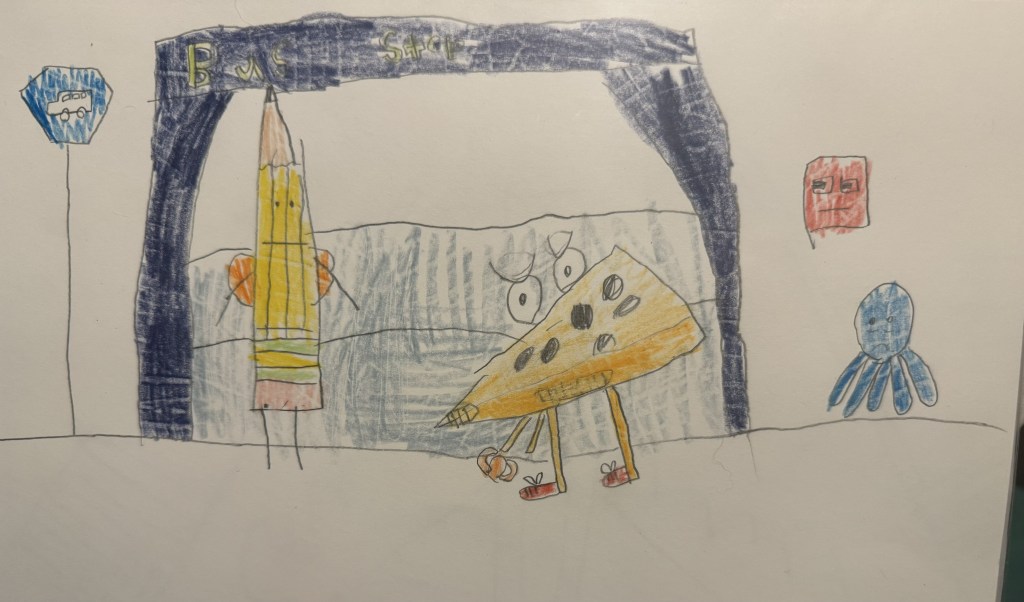
The best finds are accidental, because they bring with them that little extra startle, that unanticipated joy. Thirty years ago, when I chanced across the title Watership Down in my elementary school library, I never imagined I’d be reading it to my children one day. I wasn’t looking for the title. It just appeared in front of me. I can still hear the crinkle of the plastic library casing and see the drawing of the frightened rabbit on the cream-colored cover. A week later after finishing the final chapter, I lay in bed stunned. Somewhere in my soul, a door I didn’t know existed had been opened, and it was as if this book had been waiting in a room behind it all along. Now, my boys listen raptly in our living room to the tales of Richard Adams’ vagabond rabbits and their perilous struggle for survival. When I stop at the end of a chapter for the night, Cartter says, “Can’t we just read some of the pages in the next chapter?” Truly, a secret sandbar of a book.
Just as I didn’t know I was looking for Watership Down that day in the library, nor did I realize that a swim was the good time I sought this last day of summer. In fact, I was so intent on not swimming that I didn’t even put on a bathing suit. The first wave that I rode into the sandbar nearly took my shorts off, but I spread my legs and caught them with my ankles. Popping up onto my feet, I let out a whoop and looked out toward my boys shining in the sunlight. I rode wave after wave, letting my injured left arm drag behind, using it to hold my waistband. Cartter caught the first wave of his life, and popped up and imitated my joyful whoop. After a break, Scotty went back out with me a second time. During a lull, I held him for a moment while we bobbed over the swells. Scotty would spend hours in the waves every day if he could, and we stayed in the water until his lips turned blue. When we finished, we gathered up our little pile, walked back to the car, and returned home.
An abandoned fishing exploit, a hidden sandbar, an unexpected book. They say the road to hell is paved with good intentions. It seems the road to heaven is a series of accidental detours.
 The Raging Elitist